Growing a business in a competitive market requires more than offering quality products or services. Businesses also need to reach the right audience, communicate their value effectively, and maintain a strong online presence. In a diverse and competitive market like Los Angeles, California, digital marketing can help businesses connect with potential customers, improve brand awareness, and create opportunities for sustainable growth.
Whether you operate a healthcare practice, restaurant, real estate company, retail store, professional service firm, or e-commerce business, an effective online marketing strategy can make it easier for customers to discover your business. However, managing search engine optimization, paid advertising, social media, website content, and performance tracking requires time, expertise, and consistent effort.
Hiring a Digital Marketing Agency in Los Angeles can help businesses coordinate these activities, identify growth opportunities, and develop strategies based on their objectives and target audience. Instead of managing every marketing channel independently, businesses can work with experienced professionals who understand digital marketing methods and performance measurement.
This guide explains how hiring a digital marketing agency can support business growth, which services businesses should consider, how to evaluate potential agencies, and what to look for when selecting a marketing partner.
1. Why Digital Marketing Matters for Los Angeles Businesses
Los Angeles has a diverse business environment that includes entertainment, healthcare, hospitality, retail, real estate, professional services, and technology. Businesses operating in such a competitive market need effective ways to communicate with customers and differentiate themselves from competitors.
Many consumers research products and services online before contacting a business. They may compare websites, read customer reviews, search for nearby providers, or explore social media profiles before making a decision.
Digital marketing helps businesses become visible during this process. A well-structured website, relevant search results, informative content, and carefully managed advertising can help potential customers discover a business and understand its offerings.
Key Benefits of Digital Marketing
A well-planned marketing strategy can help businesses:
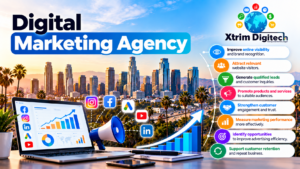
- Improve online visibility and brand recognition.
- Attract relevant website visitors.
- Generate qualified leads and customer inquiries.
- Promote products and services to suitable audiences.
- Strengthen customer engagement and trust.
- Measure marketing performance more effectively.
- Identify opportunities to improve advertising efficiency.
- Support customer retention and repeat business.
For example, a Los Angeles restaurant may benefit from local search optimization and social media content, while a professional services firm may prioritize SEO, informative website pages, and lead generation.
The right strategy depends on the business model, customer behavior, competition, and budget. Marketing should focus on measurable objectives rather than simply increasing traffic or social media followers.
2. What Does a Digital Marketing Agency Do?
A digital marketing agency helps businesses plan, implement, and evaluate marketing activities across online channels. Depending on the agency’s expertise and service offerings, its work may include search engine optimization, paid advertising, content creation, social media management, website development, and analytics.
A suitable Digital Marketing Agency in Los Angeles should first understand a business’s goals, target customers, current online presence, and available resources before recommending services.
Develop a Marketing Strategy
A marketing strategy establishes the objectives, audience, channels, budget, and performance indicators for a business’s online activities. For example, a company seeking more service inquiries may prioritize local SEO, conversion-focused landing pages, and targeted advertising. An e-commerce business may focus on product page optimization, shopping campaigns, and customer retention. A clear strategy helps businesses prioritize activities instead of investing in unrelated marketing tasks.
Manage Multiple Marketing Channels
Agencies may coordinate several channels to create a consistent customer experience.
These services can include:
- Search engine optimization.
- Local SEO and business profile optimization.
- Google Ads management.
- Social media marketing.
- Content marketing and blog writing.
- Website design and development.
- Email marketing.
- Analytics and conversion tracking.
Not every business needs every service. A good agency recommends a suitable combination based on the business’s actual requirements.
Monitor Results and Recommend Improvements
Digital marketing requires ongoing evaluation. An agency may review search performance, website conversions, advertising costs, and customer engagement to identify what is working and what needs improvement.
Regular reporting allows businesses to make informed decisions and adjust their strategies as market conditions change.
3. Improve Search Engine Visibility With SEO
Search engine optimization, commonly known as SEO, helps websites improve their visibility in organic search results. It focuses on making website content useful, accessible, relevant, and easy for search engines to understand. For businesses competing in Los Angeles, SEO can help attract people who are actively searching for relevant products, services, or information.
Conduct Relevant Keyword Research
Keyword research identifies the search terms potential customers use when looking for a business’s services.
Examples of relevant keywords include:
- Digital Marketing Agency in Los Angeles.
- Digital Marketing Services in Los Angeles.
- SEO Services in Los Angeles.
- Los Angeles SEO Company.
- Website Design Services in Los Angeles.
- Online Marketing for Small Businesses in Los Angeles.
These are potential target keywords, and their search volume and competitiveness should be verified using appropriate keyword research tools. A professional agency evaluates search intent and prioritizes keywords that match the business’s offerings rather than selecting terms based only on popularity.
Optimize Website Content
On-page SEO helps search engines and visitors understand the purpose of each page.
Important activities include:
- Writing descriptive SEO titles and meta descriptions.
- Using relevant keywords naturally in headings and paragraphs.
- Creating clear, descriptive URLs.
- Improving internal linking.
- Adding meaningful image alt text.
- Writing original service descriptions.
- Improving content readability.
- Answering common customer questions.
For example, a Los Angeles consulting firm may need separate pages for its main services, with each page explaining the relevant benefits, process, and customer requirements.
Improve Technical SEO
Technical SEO focuses on website accessibility, indexing, performance, and structure. An agency may review broken links, mobile usability, page loading performance, indexing issues, HTTPS security, XML sitemaps, and structured data where appropriate. SEO is an ongoing process. Results depend on competition, website history, content quality, technical conditions, and implementation. Businesses should avoid providers promising guaranteed first-page rankings within a fixed period.
4. Strengthen Local SEO and Reach Nearby Customers
Local SEO helps eligible businesses improve their visibility in relevant location-based searches. It can be particularly useful for restaurants, healthcare practices, retail stores, home service companies, and other businesses serving customers in specific geographic areas.
For businesses in Los Angeles, local search optimization can help customers discover relevant services and find accurate business information.
Optimize Your Google Business Profile
An accurate and complete Google Business Profile can help eligible businesses appear in relevant Google Search and Maps results.
Businesses should:
- Use their accurate business name.
- Select appropriate business categories.
- Maintain current opening hours and contact details.
- Add relevant services and business information.
- Upload genuine business photographs.
- Respond professionally to customer reviews.
- Update information when business details change.
Businesses should follow Google’s guidelines and avoid fake reviews, misleading business information, and artificial location details.
Create Useful Location-Specific Pages
Location pages can explain where a business operates, which services it provides, and how customers can access those services.
For example, a Los Angeles home improvement company may create a page describing its service coverage, common customer questions, project process, and contact options.
Each page should provide useful, distinct information. Creating multiple nearly identical pages by changing only the neighborhood name can lead to low-value content.
Build a Consistent Local Presence
Accurate business information across relevant directories and platforms helps customers find the correct details.
Local SEO also involves relevant website content, genuine reviews, and ongoing performance monitoring. Local rankings depend on factors such as relevance, distance, prominence, and competition, so no particular ranking can be guaranteed.
5. Generate Leads Through Paid Advertising
Paid advertising helps businesses reach potential customers through search engines, social media platforms, and other advertising networks. It can be useful when a business wants to promote specific services, increase inquiries, or test a new offering.
An experienced agency can help plan campaigns, manage budgets, test advertising messages, and evaluate results.
Use Google Ads to Reach Relevant Customers
Google Ads can display advertisements to people searching for particular products or services.
For example, a Los Angeles professional services firm may target relevant searches from potential clients, while an online retailer may promote selected products to appropriate audiences.
Effective campaigns typically require:
- Relevant keyword selection.
- Suitable geographic targeting.
- Negative keyword management.
- Clear and accurate ad copy.
- Relevant landing pages.
- Conversion tracking.
- Regular campaign reviews.
Improve Landing Page Quality
Advertising performance depends partly on what happens after a person clicks an advertisement.
Landing pages should clearly explain the advertised service, provide useful information, and make it easy for visitors to take the next step.
For example, a campaign promoting Digital Marketing Services in Los Angeles should direct users to a relevant service page rather than an unrelated section of the website.
Track Advertising Costs and Outcomes
Businesses should distinguish advertising spend from agency management fees and other expenses.
Useful metrics include cost per click, conversion rate, cost per qualified lead, and customer acquisition cost where measurable.
Paid advertising may generate traffic soon after campaigns are approved and launched, but leads and sales are not guaranteed. Regular optimization and reliable tracking help businesses evaluate whether their investment is producing meaningful outcomes.
6. Build Brand Awareness With Social Media Marketing
Social media marketing helps businesses communicate with customers, share useful information, introduce products and services, and maintain brand visibility.
The most suitable platforms depend on the business’s target audience, industry, content format, and marketing objectives.
Choose the Right Social Media Platforms
Different platforms can serve different purposes:
- Facebook: Community engagement, business updates, and suitable local advertising.
- Instagram: Visual storytelling, photographs, short videos, and brand content.
- LinkedIn: B2B marketing, professional services, and industry insights.
- YouTube: Educational videos, product demonstrations, and longer-form content.
Businesses should prioritize the platforms that align with their audience rather than trying to maintain every channel.
Develop a Consistent Content Calendar
A content calendar helps businesses plan topics, organize campaigns, and publish consistently.
Content may include educational posts, product demonstrations, frequently asked questions, company updates, and customer stories shared with appropriate permission.
A consistent approach helps maintain communication while ensuring that content supports business objectives.
Measure Meaningful Engagement
Social media performance should not be evaluated only through likes and follower counts.
Businesses should also examine relevant website visits, qualified inquiries, conversions, and other outcomes connected to their goals.
Social media can support brand recognition and customer relationships, but its contribution should be assessed using appropriate performance indicators.
7. Create Valuable Content for Your Audience
Content marketing involves creating useful information that helps potential customers understand products, services, and available solutions.
High-quality content can support SEO, answer customer questions, build credibility, and provide material for social media and email campaigns.
Publish Informative Blog Articles
Blog articles should answer real customer questions and provide relevant information.
For example, a Los Angeles marketing agency might publish guides about local SEO, website optimization, lead generation, and advertising performance. A real estate business may create content explaining property preparation or the steps involved in a transaction.
Content should be accurate, original, easy to read, and relevant to the intended audience.
Create Detailed Service Pages
Service pages should explain what the business offers, who may benefit, how the service works, and what customers should know before making contact.
A Digital Marketing Agency in Los Angeles may create separate pages for SEO, local SEO, paid advertising, content marketing, and website development when these are genuine services it provides.
Each page should have a clear purpose and offer information beyond a simple list of keywords.
Repurpose Existing Content
A detailed blog post can be adapted into social media updates, short educational videos, email newsletters, or infographics.
Repurposing content helps businesses communicate consistently and make better use of existing research.
Content marketing should prioritize customer value rather than publishing a high volume of low-quality articles.
8. Improve Website Performance and Conversions
A business website often serves as the central destination for digital marketing activities. It allows potential customers to understand services, evaluate credibility, compare options, and make inquiries.
However, attracting visitors is only part of the process. A website should also make it easy for visitors to find information and complete meaningful actions.
Improve Website Usability
A well-structured website should include:
- Clear navigation.
- Mobile-friendly layouts.
- Readable headings and paragraphs.
- Accurate service descriptions.
- Easy-to-find contact information.
- Secure browsing through HTTPS.
- Accessible forms and content.
- Relevant calls to action.
- Reliable page performance.
For example, a professional service provider may benefit from clear service pages, informative content, and a straightforward consultation inquiry form.
Simplify Contact and Purchase Processes
Long forms, confusing navigation, and unnecessary steps can discourage visitors from completing an action.
Businesses should review their contact forms, booking systems, phone links, and checkout processes to ensure they work properly across devices.
Website Design Services in Los Angeles should support usability, accessibility, and conversion goals alongside visual presentation.
Apply Conversion Rate Optimization
Conversion rate optimization involves identifying barriers that prevent visitors from taking desired actions.
An agency may analyze website data, review user behavior where appropriate, and test changes to headlines, page layouts, forms, and calls to action.
The aim is to improve the website experience using evidence rather than assumptions.
9. Use Data and Analytics to Make Better Decisions
Analytics helps businesses understand whether marketing activities contribute to their objectives. Without reliable measurement, it can be difficult to identify effective channels and allocate resources appropriately.
Important Digital Marketing Metrics
| Marketing Channel | Useful Metrics |
|---|---|
| SEO | Organic clicks, impressions, qualified conversions |
| Local SEO | Local visibility, website actions, relevant inquiries |
| Google Ads | Advertising spend, conversion rate, cost per lead |
| Social Media | Relevant engagement, referral traffic, conversions |
| Website | Form submissions, purchases, conversion rate |
| Email Marketing | Clicks, conversions, unsubscribes |
| Overall Marketing | Qualified leads, acquisition cost, attributable revenue |
The most useful metrics depend on the business model and marketing objectives.
Use Appropriate Analytics Tools
Google Analytics can help businesses measure website activity and configured conversion events. Google Search Console provides information about website performance in Google Search. Advertising platforms also offer campaign reporting tools.
Tracking should be configured correctly, with appropriate attention to privacy and consent requirements.
Review Reports and Recommendations
A useful report should explain what work was completed, what changed during the reporting period, which metrics matter, and what actions are recommended next.
Businesses should look for clear explanations and practical recommendations rather than reports containing unexplained numbers.
10. Save Time and Access Specialized Expertise
Managing digital marketing internally can require significant time, specialist knowledge, and coordination. Businesses may need to research keywords, create content, manage advertising accounts, maintain websites, and analyze performance.
Working with an agency can provide access to professionals with different areas of expertise, depending on the agency’s team and service scope.
Focus on Core Business Activities
Outsourcing selected marketing tasks can allow business owners and internal teams to focus more time on operations, customer service, product development, and other priorities.
The value depends on the work delegated, the quality of execution, and how effectively the agency communicates with the business.
Access Multiple Marketing Skills
Digital marketing may involve SEO specialists, content writers, designers, advertising managers, developers, and analytics professionals.
An agency may bring these capabilities together under a coordinated strategy, reducing the need for a business to manage every function independently.
Maintain Clear Communication
Hiring an agency does not remove the need for business involvement. The business still needs to provide accurate information, approve relevant materials, communicate priorities, and review performance.
A productive partnership depends on clear responsibilities, regular communication, and realistic expectations.
11. How to Choose the Right Digital Marketing Agency in Los Angeles
Selecting an agency is an important business decision. Providers differ in experience, service offerings, pricing, communication, and reporting practices. Businesses should compare potential partners according to their specific objectives rather than choosing only by price or promotional claims.
Evaluate Experience and Relevant Expertise
Ask whether the agency has worked with businesses that have similar goals, audiences, or business models. Review case studies and look for the original objectives, services provided, measurement methods, time period, and reported results. Past performance can offer useful context, but it does not guarantee future results.
Compare Services and Pricing
Review whether proposals include SEO, local SEO, content creation, advertising management, social media, website development, and analytics. Not every business requires all these services. A suitable package should reflect the business’s needs, budget, and marketing priorities.
Review Communication and Reporting
Ask who will manage your account, how frequently performance will be reviewed, and how recommendations will be communicated. A professional agency should explain its strategy, provide understandable reporting, and set realistic expectations.
Confirm Account Ownership
Ensure that your business retains appropriate access and documented ownership arrangements for its domain, website, Google Business Profile, analytics, advertising accounts, and social media profiles. Account ownership and access should be clear before work begins.
12. Common Mistakes to Avoid When Hiring an Agency
Choosing the wrong provider can waste resources and create unnecessary complications. Businesses should look for warning signs before signing an agreement.
1. Choosing an Agency Based Only on Price
Low-cost services may exclude essential work, reporting, or ongoing support. Compare deliverables and service scope before making a decision.
2. Believing Guaranteed Ranking Promises
Search rankings depend on multiple factors, including competition and website quality. Be cautious of providers promising specific positions or instant results.
3. Ignoring Communication Quality
Poor communication can delay projects and create confusion. Agree on responsibilities, response expectations, approval processes, and reporting schedules.
4. Failing to Check Account Ownership
Your business should maintain appropriate access to its website, domain, analytics, advertising accounts, and social media profiles.
5. Focusing Only on Website Traffic
More traffic does not necessarily mean more business. Evaluate qualified leads, purchases, appointment requests, and other meaningful conversions.
6. Signing a Contract Without Reviewing It
Understand the included services, contract duration, cancellation terms, additional charges, and ownership arrangements before committing.
7. Expecting Immediate Results From Every Service
SEO, content marketing, paid advertising, and social media have different timelines and measurement requirements. Evaluate each activity using appropriate expectations.
13. How Much Does a Digital Marketing Agency Cost in Los Angeles?
The cost of hiring an agency depends on the services required, campaign complexity, business size, competition, and project scope. There is no single price that applies to every business.
Common cost components include:
- Monthly agency or consulting fees.
- Advertising platform spend.
- Website design and development.
- Content research and production.
- Social media creative development.
- Analytics and tracking setup.
- Software subscriptions.
- Ongoing maintenance and optimization.
A small business may begin with website improvements and local SEO, while a larger company may require multiple channels, regular content production, and paid advertising management.
How to Set a Practical Marketing Budget
Start by identifying the most important business objective. Determine what the business can afford, define measurable targets, and prioritize services that support those targets. Ask agencies to separate management fees from advertising spend and other expenses. Review the scope of work, expected deliverables, reporting arrangements, and contract terms. Marketing budgets should be reviewed as reliable performance data becomes available. Avoid committing to services that lack a clear purpose or that the business cannot reasonably sustain.
Frequently Asked Questions About Hiring a Digital Marketing Agency in Los Angeles
1. Why should I hire a digital marketing agency in Los Angeles?
An agency can help your business plan and manage online marketing activities such as SEO, local SEO, paid advertising, content marketing, and social media. The benefits depend on your objectives, the agency’s expertise, and the quality of implementation.
2. What services does a digital marketing agency provide?
Services may include search engine optimization, Google Ads management, social media marketing, content creation, website design, email marketing, and analytics. The exact offering varies by agency.
3. How much does a digital marketing agency cost in Los Angeles?
Costs vary according to service scope, competition, project complexity, and agency expertise. Request a detailed proposal that separates agency fees, advertising budgets, and additional expenses.
4. How can digital marketing help a small business grow?
Digital marketing can help small businesses improve online visibility, reach relevant customers, generate inquiries, and measure campaign performance. The most suitable strategy depends on the business’s audience, budget, and goals.
5. How long does SEO take to show results?
SEO timelines vary according to competition, website condition, content quality, and implementation. It generally requires ongoing work, and no agency can reliably guarantee a particular ranking date.
6. Is local SEO important for Los Angeles businesses?
Local SEO can help eligible businesses become more visible in relevant location-based searches. Accurate business information, useful local content, and genuine customer reviews can support a stronger local presence.
7. Should I choose SEO or Google Ads?
The choice depends on your objectives and resources. SEO supports organic search visibility over time, while Google Ads can provide paid exposure when campaigns are approved and eligible to run. Some businesses benefit from using both.
8. How do I know if a marketing agency is performing well?
Review qualified leads, conversions, acquisition costs, relevant website traffic, and other agreed metrics. Ask for clear reports that explain results and recommend practical improvements.
9. Will I retain ownership of my website and advertising accounts?
Ownership and access arrangements should be clearly documented in the agreement. Businesses should maintain appropriate access to their domain, website, analytics, advertising accounts, and social media profiles.
10. Can a digital marketing agency guarantee business growth?
No responsible agency can guarantee specific rankings, sales, or revenue. Marketing results depend on competition, customer demand, budgets, implementation, and other factors. A professional agency should set realistic objectives and measure progress transparently.
Conclusion: Choose the Right Digital Marketing Partner for Sustainable Growth
Hiring a digital marketing agency can help businesses improve online visibility, coordinate marketing activities, reach relevant audiences, and measure performance more effectively. For businesses operating in a competitive market like Los Angeles, a structured digital strategy can create opportunities to connect with potential customers and strengthen their online presence.
A suitable Digital Marketing Agency in
1. Why Digital Marketing Matters for Los Angeles Businesses
Los Angeles has a diverse business environment that includes entertainment, healthcare, hospitality, retail, real estate, professional services, and technology. Businesses operating in such a competitive market need effective ways to communicate with customers and differentiate themselves from competitors.
Many consumers research products and services online before contacting a business. They may compare websites, read customer reviews, search for nearby providers, or explore social media profiles before making a decision.
Digital marketing helps businesses become visible during this process. A well-structured website, relevant search results, informative content, and carefully managed advertising can help potential customers discover a business and understand its offerings.
Key Benefits of Digital Marketing
A well-planned marketing strategy can help businesses:
- Improve online visibility and brand recognition.
- Attract relevant website visitors.
- Generate qualified leads and customer inquiries.
- Promote products and services to suitable audiences.
- Strengthen customer engagement and trust.
- Measure marketing performance more effectively.
- Identify opportunities to improve advertising efficiency.
- Support customer retention and repeat business.
For example, a Los Angeles restaurant may benefit from local search optimization and social media content, while a professional services firm may prioritize SEO, informative website pages, and lead generation.
The right strategy depends on the business model, customer behavior, competition, and budget. Marketing should focus on measurable objectives rather than simply increasing traffic or social media followers.
2. What Does a Digital Marketing Agency Do?
A digital marketing agency helps businesses plan, implement, and evaluate marketing activities across online channels. Depending on the agency’s expertise and service offerings, its work may include search engine optimization, paid advertising, content creation, social media management, website development, and analytics.
A suitable Digital Marketing Agency in Los Angeles should first understand a business’s goals, target customers, current online presence, and available resources before recommending services.
Develop a Marketing Strategy
A marketing strategy establishes the objectives, audience, channels, budget, and performance indicators for a business’s online activities.
For example, a company seeking more service inquiries may prioritize local SEO, conversion-focused landing pages, and targeted advertising. An e-commerce business may focus on product page optimization, shopping campaigns, and customer retention.
A clear strategy helps businesses prioritize activities instead of investing in unrelated marketing tasks.
Manage Multiple Marketing Channels
Agencies may coordinate several channels to create a consistent customer experience.
These services can include:
- Search engine optimization.
- Local SEO and business profile optimization.
- Google Ads management.
- Social media marketing.
- Content marketing and blog writing.
- Website design and development.
- Email marketing.
- Analytics and conversion tracking.
Not every business needs every service. A good agency recommends a suitable combination based on the business’s actual requirements.
Monitor Results and Recommend Improvements
Digital marketing requires ongoing evaluation. An agency may review search performance, website conversions, advertising costs, and customer engagement to identify what is working and what needs improvement.
Regular reporting allows businesses to make informed decisions and adjust their strategies as market conditions change.
3. Improve Search Engine Visibility With SEO
Search engine optimization, commonly known as SEO, helps websites improve their visibility in organic search results. It focuses on making website content useful, accessible, relevant, and easy for search engines to understand.
For businesses competing in Los Angeles, SEO can help attract people who are actively searching for relevant products, services, or information.
Conduct Relevant Keyword Research
Keyword research identifies the search terms potential customers use when looking for a business’s services.
Examples of relevant keywords include:
- Digital Marketing Agency in Los Angeles.
- Digital Marketing Services in Los Angeles.
- SEO Services in Los Angeles.
- Los Angeles SEO Company.
- Website Design Services in Los Angeles.
- Online Marketing for Small Businesses in Los Angeles.
These are potential target keywords, and their search volume and competitiveness should be verified using appropriate keyword research tools.
A professional agency evaluates search intent and prioritizes keywords that match the business’s offerings rather than selecting terms based only on popularity.
Optimize Website Content
On-page SEO helps search engines and visitors understand the purpose of each page.
Important activities include:
- Writing descriptive SEO titles and meta descriptions.
- Using relevant keywords naturally in headings and paragraphs.
- Creating clear, descriptive URLs.
- Improving internal linking.
- Adding meaningful image alt text.
- Writing original service descriptions.
- Improving content readability.
- Answering common customer questions.
For example, a Los Angeles consulting firm may need separate pages for its main services, with each page explaining the relevant benefits, process, and customer requirements.
Improve Technical SEO
Technical SEO focuses on website accessibility, indexing, performance, and structure.
An agency may review broken links, mobile usability, page loading performance, indexing issues, HTTPS security, XML sitemaps, and structured data where appropriate.
SEO is an ongoing process. Results depend on competition, website history, content quality, technical conditions, and implementation. Businesses should avoid providers promising guaranteed first-page rankings within a fixed period.
4. Strengthen Local SEO and Reach Nearby Customers
Local SEO helps eligible businesses improve their visibility in relevant location-based searches. It can be particularly useful for restaurants, healthcare practices, retail stores, home service companies, and other businesses serving customers in specific geographic areas.
For businesses in Los Angeles, local search optimization can help customers discover relevant services and find accurate business information.
Optimize Your Google Business Profile
An accurate and complete Google Business Profile can help eligible businesses appear in relevant Google Search and Maps results.
Businesses should:
- Use their accurate business name.
- Select appropriate business categories.
- Maintain current opening hours and contact details.
- Add relevant services and business information.
- Upload genuine business photographs.
- Respond professionally to customer reviews.
- Update information when business details change.
Businesses should follow Google’s guidelines and avoid fake reviews, misleading business information, and artificial location details.
Create Useful Location-Specific Pages
Location pages can explain where a business operates, which services it provides, and how customers can access those services.
For example, a Los Angeles home improvement company may create a page describing its service coverage, common customer questions, project process, and contact options.
Each page should provide useful, distinct information. Creating multiple nearly identical pages by changing only the neighborhood name can lead to low-value content.
Build a Consistent Local Presence
Accurate business information across relevant directories and platforms helps customers find the correct details.
Local SEO also involves relevant website content, genuine reviews, and ongoing performance monitoring. Local rankings depend on factors such as relevance, distance, prominence, and competition, so no particular ranking can be guaranteed.
5. Generate Leads Through Paid Advertising
Paid advertising helps businesses reach potential customers through search engines, social media platforms, and other advertising networks. It can be useful when a business wants to promote specific services, increase inquiries, or test a new offering.
An experienced agency can help plan campaigns, manage budgets, test advertising messages, and evaluate results.
Use Google Ads to Reach Relevant Customers
Google Ads can display advertisements to people searching for particular products or services.
For example, a Los Angeles professional services firm may target relevant searches from potential clients, while an online retailer may promote selected products to appropriate audiences.
Effective campaigns typically require:
- Relevant keyword selection.
- Suitable geographic targeting.
- Negative keyword management.
- Clear and accurate ad copy.
- Relevant landing pages.
- Conversion tracking.
- Regular campaign reviews.
Improve Landing Page Quality
Advertising performance depends partly on what happens after a person clicks an advertisement. Landing pages should clearly explain the advertised service, provide useful information, and make it easy for visitors to take the next step. For example, a campaign promoting Digital Marketing Services in Los Angeles should direct users to a relevant service page rather than an unrelated section of the website.
Track Advertising Costs and Outcomes
Businesses should distinguish advertising spend from agency management fees and other expenses. Useful metrics include cost per click, conversion rate, cost per qualified lead, and customer acquisition cost where measurable. Paid advertising may generate traffic soon after campaigns are approved and launched, but leads and sales are not guaranteed. Regular optimization and reliable tracking help businesses evaluate whether their investment is producing meaningful outcomes.
6. Build Brand Awareness With Social Media Marketing
Social media marketing helps businesses communicate with customers, share useful information, introduce products and services, and maintain brand visibility. The most suitable platforms depend on the business’s target audience, industry, content format, and marketing objectives.
Choose the Right Social Media Platforms
Different platforms can serve different purposes:
- Facebook: Community engagement, business updates, and suitable local advertising.
- Instagram: Visual storytelling, photographs, short videos, and brand content.
- LinkedIn: B2B marketing, professional services, and industry insights.
- YouTube: Educational videos, product demonstrations, and longer-form content.
Businesses should prioritize the platforms that align with their audience rather than trying to maintain every channel.
Develop a Consistent Content Calendar
A content calendar helps businesses plan topics, organize campaigns, and publish consistently. Content may include educational posts, product demonstrations, frequently asked questions, company updates, and customer stories shared with appropriate permission. A consistent approach helps maintain communication while ensuring that content supports business objectives.
Measure Meaningful Engagement
Social media performance should not be evaluated only through likes and follower counts. Businesses should also examine relevant website visits, qualified inquiries, conversions, and other outcomes connected to their goals. Social media can support brand recognition and customer relationships, but its contribution should be assessed using appropriate performance indicators.
7. Create Valuable Content for Your Audience
Content marketing involves creating useful information that helps potential customers understand products, services, and available solutions. High-quality content can support SEO, answer customer questions, build credibility, and provide material for social media and email campaigns.
Publish Informative Blog Articles
Blog articles should answer real customer questions and provide relevant information. For example, a Los Angeles marketing agency might publish guides about local SEO, website optimization, lead generation, and advertising performance. A real estate business may create content explaining property preparation or the steps involved in a transaction. Content should be accurate, original, easy to read, and relevant to the intended audience.
Create Detailed Service Pages
Service pages should explain what the business offers, who may benefit, how the service works, and what customers should know before making contact.
A Digital Marketing Agency in Los Angeles may create separate pages for SEO, local SEO, paid advertising, content marketing, and website development when these are genuine services it provides.
Each page should have a clear purpose and offer information beyond a simple list of keywords.
Repurpose Existing Content
A detailed blog post can be adapted into social media updates, short educational videos, email newsletters, or infographics. Repurposing content helps businesses communicate consistently and make better use of existing research. Content marketing should prioritize customer value rather than publishing a high volume of low-quality articles.
8. Improve Website Performance and Conversions
A business website often serves as the central destination for digital marketing activities. It allows potential customers to understand services, evaluate credibility, compare options, and make inquiries.
However, attracting visitors is only part of the process. A website should also make it easy for visitors to find information and complete meaningful actions.
Improve Website Usability
A well-structured website should include:
- Clear navigation.
- Mobile-friendly layouts.
- Readable headings and paragraphs.
- Accurate service descriptions.
- Easy-to-find contact information.
- Secure browsing through HTTPS.
- Accessible forms and content.
- Relevant calls to action.
- Reliable page performance.
For example, a professional service provider may benefit from clear service pages, informative content, and a straightforward consultation inquiry form.
Simplify Contact and Purchase Processes
Long forms, confusing navigation, and unnecessary steps can discourage visitors from completing an action. Businesses should review their contact forms, booking systems, phone links, and checkout processes to ensure they work properly across devices. Website Design Services in Los Angeles should support usability, accessibility, and conversion goals alongside visual presentation.
Apply Conversion Rate Optimization
Conversion rate optimization involves identifying barriers that prevent visitors from taking desired actions. An agency may analyze website data, review user behavior where appropriate, and test changes to headlines, page layouts, forms, and calls to action. The aim is to improve the website experience using evidence rather than assumptions.
9. Use Data and Analytics to Make Better Decisions
Analytics helps businesses understand whether marketing activities contribute to their objectives. Without reliable measurement, it can be difficult to identify effective channels and allocate resources appropriately.
Important Digital Marketing Metrics
| Marketing Channel | Useful Metrics |
|---|---|
| SEO | Organic clicks, impressions, qualified conversions |
| Local SEO | Local visibility, website actions, relevant inquiries |
| Google Ads | Advertising spend, conversion rate, cost per lead |
| Social Media | Relevant engagement, referral traffic, conversions |
| Website | Form submissions, purchases, conversion rate |
| Email Marketing | Clicks, conversions, unsubscribes |
| Overall Marketing | Qualified leads, acquisition cost, attributable revenue |
The most useful metrics depend on the business model and marketing objectives.
Use Appropriate Analytics Tools
Google Analytics can help businesses measure website activity and configured conversion events. Google Search Console provides information about website performance in Google Search. Advertising platforms also offer campaign reporting tools. Tracking should be configured correctly, with appropriate attention to privacy and consent requirements.
Review Reports and Recommendations
A useful report should explain what work was completed, what changed during the reporting period, which metrics matter, and what actions are recommended next. Businesses should look for clear explanations and practical recommendations rather than reports containing unexplained numbers.
10. Save Time and Access Specialized Expertise
Managing digital marketing internally can require significant time, specialist knowledge, and coordination. Businesses may need to research keywords, create content, manage advertising accounts, maintain websites, and analyze performance. Working with an agency can provide access to professionals with different areas of expertise, depending on the agency’s team and service scope.
Focus on Core Business Activities
Outsourcing selected marketing tasks can allow business owners and internal teams to focus more time on operations, customer service, product development, and other priorities. The value depends on the work delegated, the quality of execution, and how effectively the agency communicates with the business.
Access Multiple Marketing Skills
Digital marketing may involve SEO specialists, content writers, designers, advertising managers, developers, and analytics professionals. An agency may bring these capabilities together under a coordinated strategy, reducing the need for a business to manage every function independently.
Maintain Clear Communication
Hiring an agency does not remove the need for business involvement. The business still needs to provide accurate information, approve relevant materials, communicate priorities, and review performance. A productive partnership depends on clear responsibilities, regular communication, and realistic expectations.
11. How to Choose the Right Digital Marketing Agency in Los Angeles
Selecting an agency is an important business decision. Providers differ in experience, service offerings, pricing, communication, and reporting practices. Businesses should compare potential partners according to their specific objectives rather than choosing only by price or promotional claims.
Evaluate Experience and Relevant Expertise
Ask whether the agency has worked with businesses that have similar goals, audiences, or business models. Review case studies and look for the original objectives, services provided, measurement methods, time period, and reported results. Past performance can offer useful context, but it does not guarantee future results.
Compare Services and Pricing
Review whether proposals include SEO, local SEO, content creation, advertising management, social media, website development, and analytics. Not every business requires all these services. A suitable package should reflect the business’s needs, budget, and marketing priorities.
Review Communication and Reporting
Ask who will manage your account, how frequently performance will be reviewed, and how recommendations will be communicated. A professional agency should explain its strategy, provide understandable reporting, and set realistic expectations.
Confirm Account Ownership
Ensure that your business retains appropriate access and documented ownership arrangements for its domain, website, Google Business Profile, analytics, advertising accounts, and social media profiles. Account ownership and access should be clear before work begins.
12. Common Mistakes to Avoid When Hiring an Agency
Choosing the wrong provider can waste resources and create unnecessary complications. Businesses should look for warning signs before signing an agreement.
1. Choosing an Agency Based Only on Price
Low-cost services may exclude essential work, reporting, or ongoing support. Compare deliverables and service scope before making a decision.
2. Believing Guaranteed Ranking Promises
Search rankings depend on multiple factors, including competition and website quality. Be cautious of providers promising specific positions or instant results.
3. Ignoring Communication Quality
Poor communication can delay projects and create confusion. Agree on responsibilities, response expectations, approval processes, and reporting schedules.
4. Failing to Check Account Ownership
Your business should maintain appropriate access to its website, domain, analytics, advertising accounts, and social media profiles.
5. Focusing Only on Website Traffic
More traffic does not necessarily mean more business. Evaluate qualified leads, purchases, appointment requests, and other meaningful conversions.
6. Signing a Contract Without Reviewing It
Understand the included services, contract duration, cancellation terms, additional charges, and ownership arrangements before committing.
7. Expecting Immediate Results From Every Service
SEO, content marketing, paid advertising, and social media have different timelines and measurement requirements. Evaluate each activity using appropriate expectations.
13. How Much Does a Digital Marketing Agency Cost in Los Angeles?
The cost of hiring an agency depends on the services required, campaign complexity, business size, competition, and project scope. There is no single price that applies to every business.
Common cost components include:
- Monthly agency or consulting fees.
- Advertising platform spend.
- Website design and development.
- Content research and production.
- Social media creative development.
- Analytics and tracking setup.
- Software subscriptions.
- Ongoing maintenance and optimization.
A small business may begin with website improvements and local SEO, while a larger company may require multiple channels, regular content production, and paid advertising management.
How to Set a Practical Marketing Budget
Start by identifying the most important business objective. Determine what the business can afford, define measurable targets, and prioritize services that support those targets. Ask agencies to separate management fees from advertising spend and other expenses. Review the scope of work, expected deliverables, reporting arrangements, and contract terms. Marketing budgets should be reviewed as reliable performance data becomes available. Avoid committing to services that lack a clear purpose or that the business cannot reasonably sustain.
Frequently Asked Questions About Hiring a Digital Marketing Agency in Los Angeles
1. Why should I hire a digital marketing agency in Los Angeles?
An agency can help your business plan and manage online marketing activities such as SEO, local SEO, paid advertising, content marketing, and social media. The benefits depend on your objectives, the agency’s expertise, and the quality of implementation.
2. What services does a digital marketing agency provide?
Services may include search engine optimization, Google Ads management, social media marketing, content creation, website design, email marketing, and analytics. The exact offering varies by agency.
3. How much does a digital marketing agency cost in Los Angeles?
Costs vary according to service scope, competition, project complexity, and agency expertise. Request a detailed proposal that separates agency fees, advertising budgets, and additional expenses.
4. How can digital marketing help a small business grow?
Digital marketing can help small businesses improve online visibility, reach relevant customers, generate inquiries, and measure campaign performance. The most suitable strategy depends on the business’s audience, budget, and goals.
5. How long does SEO take to show results?
SEO timelines vary according to competition, website condition, content quality, and implementation. It generally requires ongoing work, and no agency can reliably guarantee a particular ranking date.
6. Is local SEO important for Los Angeles businesses?
Local SEO can help eligible businesses become more visible in relevant location-based searches. Accurate business information, useful local content, and genuine customer reviews can support a stronger local presence.
7. Should I choose SEO or Google Ads?
The choice depends on your objectives and resources. SEO supports organic search visibility over time, while Google Ads can provide paid exposure when campaigns are approved and eligible to run. Some businesses benefit from using both.
8. How do I know if a marketing agency is performing well?
Review qualified leads, conversions, acquisition costs, relevant website traffic, and other agreed metrics. Ask for clear reports that explain results and recommend practical improvements.
9. Will I retain ownership of my website and advertising accounts?
Ownership and access arrangements should be clearly documented in the agreement. Businesses should maintain appropriate access to their domain, website, analytics, advertising accounts, and social media profiles.
10. Can a digital marketing agency guarantee business growth?
No responsible agency can guarantee specific rankings, sales, or revenue. Marketing results depend on competition, customer demand, budgets, implementation, and other factors. A professional agency should set realistic objectives and measure progress transparently.
Conclusion: Choose the Right Digital Marketing Partner for Sustainable Growth
Hiring a digital marketing agency can help businesses improve online visibility, coordinate marketing activities, reach relevant audiences, and measure performance more effectively. For businesses operating in a competitive market like Los Angeles, a structured digital strategy can create opportunities to connect with potential customers and strengthen their online presence.
A suitable Digital Marketing Agency in Los Angeles should understand your business goals, recommend relevant services, explain its strategy clearly, and provide transparent reporting. SEO, local SEO, paid advertising, social media, content marketing, and website optimization can all contribute to growth when selected according to actual business requirements.
Before hiring an agency, review its experience, compare proposals, examine case studies, ask detailed questions, and confirm account ownership arrangements. The most expensive package is not automatically the best choice, and not every business needs every marketing service.
The goal is to build a marketing partnership that supports measurable objectives, improves customer experiences, and adapts as business needs evolve. With careful planning, consistent execution, and regular performance reviews, businesses can establish a stronger foundation for sustainable digital growth.
should understand your business goals, recommend relevant services, explain its strategy clearly, and provide transparent reporting. SEO, local SEO, paid advertising, social media, content marketing, and website optimization can all contribute to growth when selected according to actual business requirements.
Before hiring an agency, review its experience, compare proposals, examine case studies, ask detailed questions, and confirm account ownership arrangements. The most expensive package is not automatically the best choice, and not every business needs every marketing service.
The goal is to build a marketing partnership that supports measurable objectives, improves customer experiences, and adapts as business needs evolve. With careful planning, consistent execution, and regular performance reviews, businesses can establish a stronger foundation for sustainable digital growth.