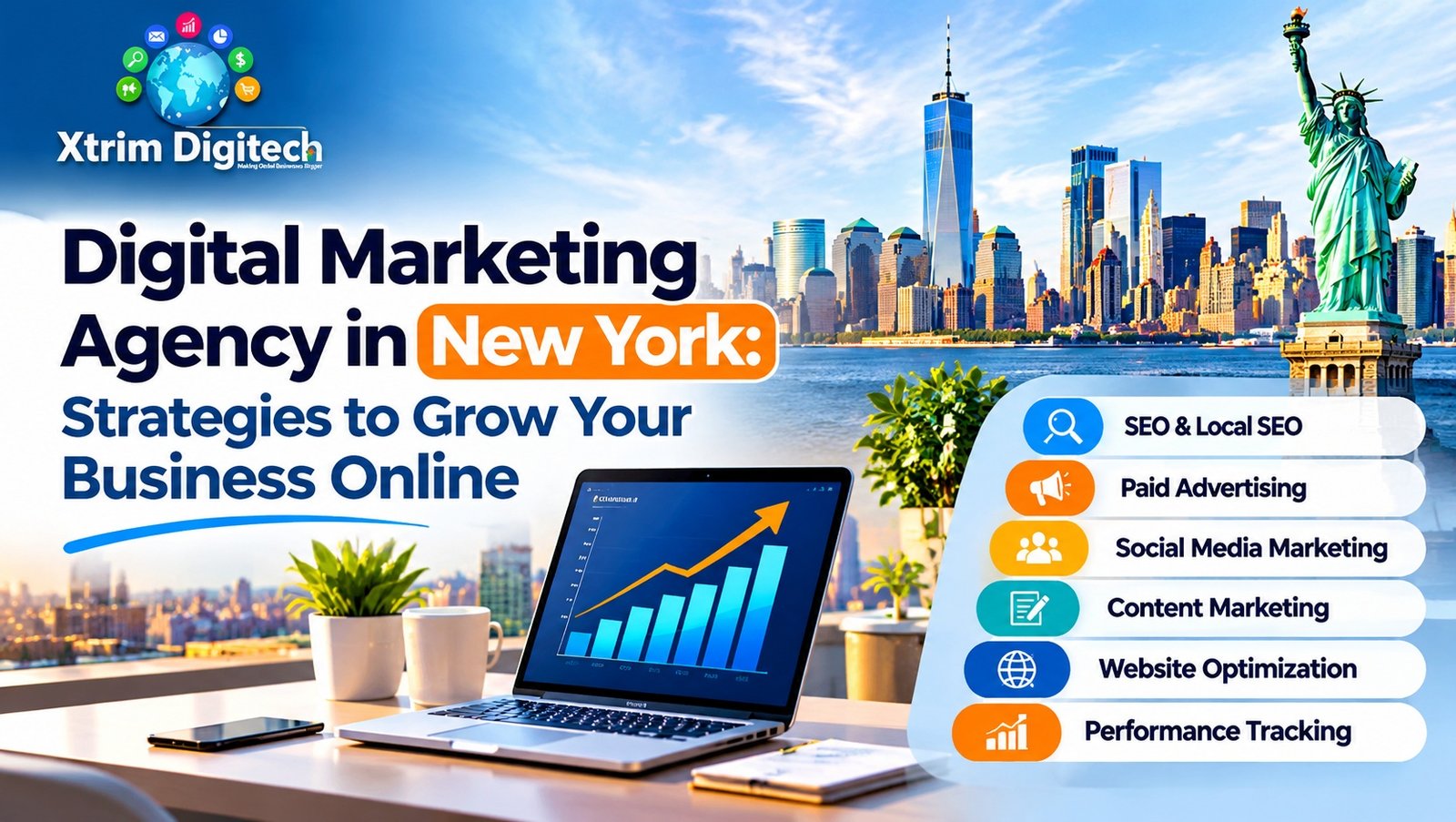
Growing a business in today’s digital environment requires more than having a website or posting occasionally on social media. Businesses need a clear strategy to reach their target audience, build brand awareness, attract relevant visitors, and convert potential customers into paying clients. New York is a competitive market with businesses across healthcare, real estate, finance, retail, hospitality, professional services, technology, and e-commerce. To stand out, businesses need to understand their customers, communicate their value clearly, and maintain a consistent online presence. A professional Digital Marketing Agency in New York can help businesses plan and manage online marketing activities according to their goals, audience, industry, and available budget. These activities may include search engine optimization (SEO), Google Ads, social media marketing, content marketing, website optimization, email marketing, and performance tracking.
Xtrim Digitech is a digital marketing company that offers services such as SEO, local SEO, Google Ads, social media marketing, content marketing, and related digital marketing support. Businesses exploring online growth strategies can use a structured marketing approach to identify suitable channels and understand how different activities contribute to business objectives. This guide explains practical digital marketing strategies that businesses can consider to improve their online visibility, reach relevant audiences, and build a stronger digital presence in New York.
Why Businesses in New York Need Digital Marketing
Customers often use search engines, social media platforms, websites, online reviews, and digital advertisements to research businesses before making purchasing decisions.
In a competitive market such as New York, businesses need to communicate what makes their products or services relevant to potential customers. A well-planned digital marketing strategy can help them reach people who are actively searching for solutions or exploring available options.
Digital marketing can help businesses:
- Improve online visibility.
- Reach relevant audiences.
- Attract website visitors.
- Generate qualified enquiries.
- Build brand awareness.
- Promote products and services.
- Improve customer engagement.
- Measure marketing performance.
- Support customer retention.
- Identify opportunities for business growth.
For example, a local restaurant may focus on local SEO, customer reviews, and social media content. A professional consulting firm may prioritize SEO, informative articles, and lead generation. An e-commerce business may need product optimization, paid advertising, email marketing, and conversion improvements. The appropriate strategy depends on the business model, target audience, competition, and objectives.
A Digital Marketing Agency in New York can help businesses evaluate these requirements and select suitable marketing activities instead of investing in every available channel without a clear purpose.
Grow Your Business with Local SEO That Delivers Results
Improve your Google rankings, optimize your Google Business Profile,
attract more local customers, and generate high-quality leads with
Xtrim Digitech's proven digital marketing strategies.
Grow Your Business with Local SEO That Delivers Results
Improve your Google rankings, optimize your Google Business Profile, attract more local customers, and generate high-quality leads with Xtrim Digitech's proven digital marketing strategies.
What Is Digital Marketing?
Digital marketing refers to promoting products, services, or brands through online channels. It combines different techniques to help businesses connect with potential customers throughout their purchasing journey.
Common digital marketing services include:
- Search Engine Optimization (SEO)
- Local SEO
- Google Ads and pay-per-click advertising
- Social media marketing
- Content marketing
- Website design and optimization
- Email marketing
- Conversion rate optimization
- Analytics and performance reporting
- Online reputation management
These activities can support different stages of the customer journey.
For example, SEO can help users discover a business through relevant search queries. Social media can introduce a brand to new audiences, while paid advertising can provide visibility for selected products or services. A well-designed website can then help visitors understand the offering and take the next step.
The objective is to create a connected marketing strategy in which each channel serves a clear purpose.
How to Set Clear Digital Marketing Goals
Before choosing marketing services, businesses should identify what they want to achieve. Clear goals make it easier to select channels, allocate budgets, and evaluate performance.
Increase Website Traffic
Some businesses want to attract more visitors through organic search, paid campaigns, social media, or content marketing.
However, traffic growth is useful only when it attracts people who are relevant to the business.
Generate Qualified Leads
Service-based companies may want more calls, enquiry forms, consultations, appointment requests, or other meaningful customer enquiries.
Lead quality should be measured alongside lead volume.
Increase Sales and Revenue
E-commerce stores and businesses selling products may focus on online sales, average order value, customer acquisition cost, and return on advertising spend.
Improve Brand Awareness
Businesses entering a new market may need to introduce their products, explain their services, and establish recognition among potential customers.
Retain Existing Customers
Email marketing, helpful content, customer support, and relevant follow-up communication can help businesses maintain relationships with existing customers.
When selecting digital marketing services in New York, businesses should prioritize goals that are specific, measurable, and connected to their commercial objectives.
Understanding Your Target Audience
An effective digital marketing strategy begins with understanding the people a business wants to reach.
Without audience research, businesses may spend money on campaigns that attract visitors who are unlikely to become customers.
Important audience considerations include:
- Age range and relevant demographics.
- Geographic location.
- Customer needs and challenges.
- Interests and preferences.
- Search behaviour.
- Purchasing motivations.
- Budget and buying considerations.
- Preferred communication channels.
For example, a business targeting customers in Manhattan may need a different local marketing approach from a company serving customers across Brooklyn, Queens, the Bronx, Staten Island, or the wider New York metropolitan area.
Similarly, a business selling directly to consumers may require a different strategy from a B2B company targeting decision-makers.
Audience research helps determine which keywords to target, what content to publish, which advertising platforms to use, and how to communicate the value of a product or service.
Why SEO Services Matter for Business Growth
Search Engine Optimization helps improve a website’s visibility in organic search results for relevant queries.
When people search for products, services, or information, they often explore search results before deciding which businesses to consider. SEO can help businesses make their websites more discoverable for those searches.
Keyword Research
Keyword research identifies the terms potential customers use when searching online.
For businesses targeting the New York market, relevant phrases may include:
- Digital Marketing Agency in New York.
- Digital Marketing Services in New York.
- SEO Company in New York.
- SEO Services in New York.
- Social Media Marketing Agency in New York.
- Google Ads Agency in New York.
These keywords should be selected according to the services offered and the search intent behind each query.
On-Page SEO
On-page SEO involves improving website elements such as page titles, headings, URLs, internal links, images, and content.
Each important page should communicate its topic clearly and provide useful information to visitors.
Technical SEO
Technical SEO focuses on issues that can affect crawling, indexing, website structure, mobile usability, and performance.
A technically sound website makes it easier for search engines to access and understand its content.
Content Optimization
Useful service pages, articles, guides, and FAQs can answer customer questions and support relevant organic search visibility.
Link and Authority Development
Relevant, trustworthy links can help search engines discover content and assess a website’s broader reputation. Link-building activities should prioritize genuine relevance and quality rather than artificial link schemes. SEO is generally a long-term activity that requires ongoing work. Rankings and traffic are not guaranteed, and results depend on competition, website quality, search demand, and other factors. For businesses seeking sustainable organic visibility, SEO services in New York can form an important part of a broader marketing strategy.
How Local SEO Helps New York Businesses
Local SEO is particularly useful for businesses serving customers in specific geographic areas.
Examples include restaurants, healthcare providers, retail stores, law firms, home service companies, salons, and other businesses that depend on local customers.
Local SEO can include:
- Google Business Profile optimization.
- Accurate business information.
- Local keyword research.
- Location-specific website pages.
- Customer review management.
- Relevant local citations.
- Local content development.
- Website and contact information consistency.
For example, a business serving customers in Manhattan should clearly communicate its actual service area, location details, and relevant offerings. Businesses serving several boroughs may need useful, distinct location information where appropriate. A Google Business Profile can help eligible businesses display important information in Google Search and Google Maps. The profile should accurately represent the business and comply with Google’s guidelines.
Local SEO should focus on genuine geographic relevance rather than repeating city names unnaturally across every page. A suitable Digital Marketing Agency in New York can help businesses plan local search activities according to their actual locations, customer needs, and service areas.
How Google Ads Can Generate Relevant Leads
Google Ads allows businesses to advertise across Google’s advertising network and reach audiences based on factors such as search queries, audience signals, location settings, and campaign objectives.
Paid advertising can be useful when a business wants to promote a particular service, test demand, or reach users searching for relevant solutions.
Search Advertising
Search campaigns can display ads for selected search queries. They may be suitable for businesses offering professional services, local services, or products with clear purchase intent.
Display and Video Advertising
Display and video campaigns can help businesses introduce their brands, communicate product information, and reach selected audiences across supported placements.
Remarketing
Where appropriate and subject to applicable privacy and platform requirements, remarketing can help businesses reconnect with previous website visitors or other eligible audiences.
Campaign Optimization
Successful campaign management involves more than launching advertisements. Businesses should monitor:
- Advertising spend.
- Search terms and audience relevance.
- Click-through rate.
- Conversion rate.
- Cost per lead.
- Qualified enquiries.
- Sales and revenue.
- Return on advertising spend.
For example, a business may receive many clicks but few qualified enquiries. In that situation, the problem could involve keyword targeting, advertising messages, landing page content, or the enquiry process.
Google Ads services in New York should therefore be planned around meaningful outcomes instead of clicks and impressions alone.
Why Social Media Marketing Is Important
Social media platforms allow businesses to share information, introduce products, publish educational content, and communicate with audiences.
Social media marketing may involve:
- Content planning.
- Graphic design and creative development.
- Short-form videos.
- Educational posts.
- Community engagement.
- Paid social campaigns.
- Audience research.
- Performance reporting.
The right platform depends on the business and its target audience.
For example, a fashion retailer may benefit from visual content, while a B2B consulting firm may focus on professional insights and industry-related discussions. A restaurant may use images, short videos, menu updates, and customer-focused content.
Businesses should maintain a consistent brand voice and provide useful information rather than publishing repetitive promotional posts.
Social media marketing in New York should reflect the audience’s interests, the company’s services, and the type of communication that supports its marketing objectives.
How Content Marketing Builds Online Visibility
Content marketing involves creating and distributing useful information to attract, educate, and engage relevant audiences.
Instead of focusing exclusively on advertisements, businesses can publish content that answers questions and helps customers understand their options.
Common content formats include:
- Blog articles.
- Service pages.
- Frequently asked questions.
- Educational guides.
- Case studies.
- Videos.
- Infographics.
- Email newsletters.
- Social media posts.
Create Content Around Customer Questions
Businesses should identify the questions customers ask before purchasing a product or service.
For example, a marketing agency may publish articles about SEO, paid advertising, website conversion, social media strategy, and campaign measurement.
Build Relevant Topic Coverage
Related articles can explore different aspects of a subject and link to relevant service pages where useful.
This helps readers discover additional information and creates a more organized website experience.
Prioritize Accuracy and Originality
Content should provide meaningful information rather than repeating generic statements to increase word count.
Businesses should review facts, use clear language, and update articles when information changes.
Measure Content Performance
Useful metrics may include organic visits, engaged sessions, enquiry submissions, assisted conversions, and the relevance of traffic attracted by individual pages.
Content marketing can support SEO services in New York by creating helpful resources for users and strengthening the relevance of a website’s content.
Why Your Website Matters in Digital Marketing
A website often serves as the central destination for visitors who discover a business through search engines, advertisements, social media, email, or referrals.
Even a well-targeted marketing campaign may perform poorly if the website does not communicate the business’s value or provide a practical next step.
A business website should include:
- Clear information about products and services.
- Easy-to-use navigation.
- Responsive mobile design.
- Relevant images and content.
- Visible contact details.
- Functional enquiry forms.
- Appropriate trust information.
- Secure connections.
- Fast and reliable page performance.
- Clear calls to action.
For example, a visitor arriving from a paid advertisement should be directed to a page relevant to the advertised service rather than a generic homepage that does not address the visitor’s question.
Website optimization should also consider accessibility, readability, technical performance, and privacy requirements.
Businesses may need website design, development, or conversion optimization alongside their digital marketing campaigns to create a more effective customer journey.
How Email Marketing Supports Customer Relationships
Email marketing allows businesses to communicate with people who have voluntarily subscribed or otherwise provided appropriate permission for relevant communication.
It can support customer education, product updates, service announcements, and retention activities.
Common email marketing activities include:
Welcome Emails
These messages introduce the business, explain what subscribers can expect, and provide useful starting information.
Educational Newsletters
Businesses can share relevant articles, guides, updates, and insights that help subscribers understand their products or services.
Follow-Up Communication
Where appropriate, follow-up messages can help customers continue a purchase or enquiry process.
Customer Retention
Existing customers may receive relevant updates, useful resources, or service information based on their preferences and consent.
Email campaigns should include accurate sender information, appropriate unsubscribe options, and responsible handling of personal data. Businesses should also consider applicable privacy and anti-spam laws.
Email marketing works best when messages are relevant to the recipient rather than sent indiscriminately to large lists.
Why Conversion Rate Optimization Matters
Digital marketing is not only about attracting visitors. Businesses also need to understand whether those visitors take meaningful actions.
Conversion Rate Optimization (CRO) focuses on improving the percentage of visitors who complete a desired action.
Depending on the business, conversions may include:
- Submitting an enquiry form.
- Requesting a quotation.
- Calling the business.
- Booking an appointment.
- Completing an online purchase.
- Registering for a service.
- Downloading a useful resource.
Improve Landing Page Relevance
The landing page should match the message that brought the visitor to the website.
Simplify Forms
Forms should request only the information necessary for the intended purpose. Unnecessary fields can create friction.
Make Calls to Action Clear
Visitors should understand what happens when they select a button or submit a form.
Improve Mobile Usability
Buttons, menus, images, and forms should work properly on smaller screens.
Test Changes Carefully
Businesses can test suitable variations in page layout, content, forms, or calls to action to understand which changes improve performance.
CRO can help businesses make better use of existing traffic. A well-planned digital marketing strategy should therefore consider both acquisition and conversion.
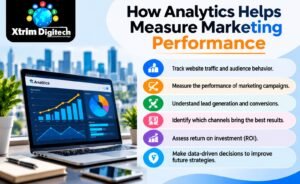
How Analytics Helps Measure Marketing Performance
Analytics helps businesses understand where visitors come from, how they interact with a website, and which marketing activities contribute to business outcomes.
Depending on the business, useful metrics may include:
| Metric | What it helps measure |
|---|---|
| Organic traffic | Visits from unpaid search results |
| Paid traffic | Visits generated through paid advertising |
| Conversion rate | Percentage of visitors completing a defined action |
| Cost per lead | Advertising cost associated with generating a lead |
| Qualified leads | Leads that meet the business’s defined criteria |
| Customer acquisition cost | Cost associated with acquiring a customer |
| Return on ad spend | Revenue attributed to advertising relative to ad spend |
| Engagement metrics | How visitors interact with website content |
| Email engagement | How recipients interact with email campaigns |
Businesses should define conversion events accurately and ensure tracking is configured appropriately.
For example, a form submission should be recorded as a lead only when the tracking setup reflects a genuine completed enquiry. Duplicate events or poorly configured tracking can distort reports.
Analytics reports should connect marketing activity with business objectives. High traffic or large numbers of impressions do not necessarily mean that a campaign is producing valuable customers.
Regular reviews can help identify opportunities, address underperforming campaigns, and improve future decisions.
How to Choose a Digital Marketing Agency in New York
Selecting a marketing partner requires more than comparing service lists or monthly fees.
Businesses should assess the provider’s strategic approach, relevant experience, reporting process, communication, and ability to understand their objectives.
Review Relevant Experience
Look for examples of work that relate to your industry, target audience, or marketing requirements.
Where case studies are available, examine the objectives, activities, measurement methods, and reported outcomes.
Understand the Services Offered
Determine whether the agency provides the services your business actually needs, such as SEO, local SEO, paid advertising, content marketing, social media, or website optimization.
Evaluate the Strategy
Ask how the agency will identify priorities, research competitors, select channels, and define success.
A suitable provider should explain why particular activities are recommended.
Ask About Reporting
Understand which metrics will be reported, how frequently reports will be shared, and how results will influence future decisions.
Confirm Budget and Scope
Clarify agency fees, advertising spend, third-party expenses, deliverables, project timelines, and responsibilities.
Check Communication and Account Access
Businesses should retain appropriate ownership and access to their websites, advertising accounts, analytics data, and other important digital assets.
Avoid Unrealistic Guarantees
SEO rankings, lead volumes, and revenue outcomes depend on many factors. Be cautious of guarantees that do not explain the assumptions, measurement methods, or limitations involved.
When comparing a Digital Marketing Agency in New York, choose a partner that communicates clearly and connects its proposed work with measurable business objectives.
How Much Should Businesses Invest in Digital Marketing?
There is no universal marketing budget suitable for every business.
The appropriate investment depends on factors such as:
- Business size and growth stage.
- Industry competition.
- Target audience.
- Geographic coverage.
- Marketing objectives.
- Existing website quality.
- Advertising requirements.
- Content production needs.
- Customer acquisition costs.
- Available internal resources.
A business focused on long-term organic visibility may prioritize SEO and content. Another business that needs to test immediate demand may allocate part of its budget to paid advertising.
An established e-commerce business may need a combination of paid media, product SEO, email marketing, and conversion optimization.
Businesses should distinguish between agency management fees and advertising spend. They should also account for website development, content production, software, and other relevant expenses.
A practical approach is to set an initial budget, define measurable goals, monitor results, and adjust spending based on evidence.
Common Digital Marketing Mistakes to Avoid
Businesses can lose time and resources when marketing activities are not aligned with their objectives.
Choosing Services Without a Strategy
Using multiple channels without understanding their purpose can spread budgets and resources too thinly.
Targeting the Wrong Audience
Broad targeting may generate traffic or engagement without attracting relevant customers.
Expecting Immediate SEO Results
Organic search visibility usually requires ongoing work, and results can vary according to competition and website conditions.
Focusing Only on Vanity Metrics
Impressions, likes, and clicks provide useful context but do not necessarily demonstrate commercial success.
Ignoring Website Performance
Slow pages, unclear messaging, broken forms, and difficult navigation can reduce the effectiveness of marketing campaigns.
Publishing Low-Quality Content
Content should answer real questions and provide value rather than simply repeat keywords.
Failing to Track Conversions
Without appropriate tracking, businesses may struggle to identify which campaigns generate qualified leads or sales.
Neglecting Existing Customers
Marketing strategies should consider retention and customer relationships as well as new customer acquisition.
Avoiding these mistakes helps businesses build a more focused and measurable digital marketing process.
How to Build an Effective Digital Marketing Strategy
Businesses can use a structured process to plan, implement, and improve their marketing activities.
Step 1: Define Business Objectives
Identify whether the main priority is awareness, website traffic, leads, sales, customer retention, or another measurable outcome.
Step 2: Research the Market
Understand the target audience, competitors, customer needs, geographic market, and relevant search behaviour.
Step 3: Audit the Existing Digital Presence
Review the website, search visibility, Google Business Profile where applicable, social media accounts, advertising campaigns, and current analytics.
Step 4: Select Priority Channels
Choose the channels that best support the objectives and budget.
Step 5: Create a Content and Campaign Plan
Develop relevant service pages, articles, social content, advertising messages, and landing pages according to the selected strategy.
Step 6: Configure Measurement
Set up appropriate analytics, conversion tracking, and reporting to measure meaningful results.
Step 7: Launch and Monitor
Implement the planned activities and review performance regularly.
Step 8: Improve Based on Evidence
Use the results to refine targeting, content, landing pages, budgets, and channel priorities.
This process can help businesses approach digital marketing services in New York with clearer expectations and a stronger focus on measurable outcomes.
How Xtrim Digitech Supports Digital Marketing Goals
Xtrim Digitech is a digital marketing company based in Indore, India. The company works across digital marketing service areas that include SEO, local SEO, Google Ads, social media marketing, and content marketing.
For businesses exploring online growth, a connected strategy can help bring different marketing activities together.
For example, SEO can support organic search visibility, while content marketing can provide useful information for potential customers. Paid advertising can help reach selected audiences, and website optimization can improve the experience of visitors who arrive through different channels.
Local SEO may also be relevant for businesses targeting specific geographic markets, provided their location and service-area information accurately reflects their operations.
When planning marketing activities for a market such as New York, businesses should consider local competition, audience behaviour, advertising costs, search intent, and the resources required to manage campaigns.
Xtrim Digitech can be considered by businesses evaluating digital marketing support across these areas. Before beginning a project, businesses should confirm the services available, the proposed scope, communication arrangements, reporting methods, and experience relevant to their requirements.
The objective should be to select marketing activities that align with business goals rather than applying the same package to every company.
Key Takeaways
Digital marketing can help businesses build online visibility, reach relevant audiences, and measure their marketing performance when activities are planned around clear objectives.
The main points to remember are:
- Define business goals before selecting marketing channels.
- Understand your target audience and its needs.
- Use SEO to support relevant organic search visibility.
- Consider local SEO when serving specific geographic areas.
- Use Google Ads strategically and monitor conversion quality.
- Create useful content that answers customer questions.
- Choose social media platforms according to audience behaviour.
- Maintain a clear, responsive, and user-friendly website.
- Use email marketing responsibly to support customer relationships.
- Track leads, sales, and other meaningful outcomes.
- Evaluate agencies based on strategy, transparency, and relevant experience.
- Review performance regularly and improve activities using data.
A well-planned digital marketing strategy can help businesses build a stronger online presence and make informed decisions about their marketing investments.
Frequently Asked Questions
1. What does a Digital Marketing Agency in New York do?
A digital marketing agency can help businesses plan and manage online marketing activities such as SEO, local SEO, paid advertising, social media marketing, content marketing, email marketing, website optimization, and analytics. The exact services depend on the agency and project scope.
2. Which digital marketing services are most useful for small businesses?
3. How can SEO help a business grow online?
4. Is Google Ads suitable for businesses in New York?
5. How does local SEO help businesses in New York?
6. How long does digital marketing take to show results?
7. How much does digital marketing cost in New York?
8. Why is website optimization important for digital marketing?
9. How can businesses measure digital marketing success?
10. How can Xtrim Digitech support a business's online presence?
Frequently Asked Questions
A digital marketing agency can help businesses plan and manage online marketing activities such as SEO, local SEO, paid advertising, social media marketing, content marketing, email marketing, website optimization, and analytics. The exact services depend on the agency and project scope.
Conclusion: Building a Stronger Online Presence
Growing a business online requires a clear understanding of the target audience, a well-defined marketing strategy, and consistent attention to performance. Businesses operating in New York can consider several digital marketing channels, including SEO, local SEO, Google Ads, social media marketing, content marketing, email marketing, and website optimization. Each channel serves a different purpose, so the right combination depends on the business’s objectives, budget, industry, and customers. A Digital Marketing Agency in New York can help businesses evaluate these opportunities, develop a suitable plan, and measure the effectiveness of marketing activities. However, meaningful progress also depends on useful content, accurate tracking, clear communication, and regular improvements.
Xtrim Digitech provides digital marketing services across SEO, local SEO, Google Ads, social media marketing, and content marketing. Businesses considering digital marketing support can evaluate their requirements and confirm the appropriate scope before starting a project. The most effective approach is to connect marketing activities with measurable business outcomes. By understanding customer needs, selecting relevant channels, improving the website experience, and reviewing results regularly, businesses can build a stronger digital presence and make better-informed marketing decisions over time.