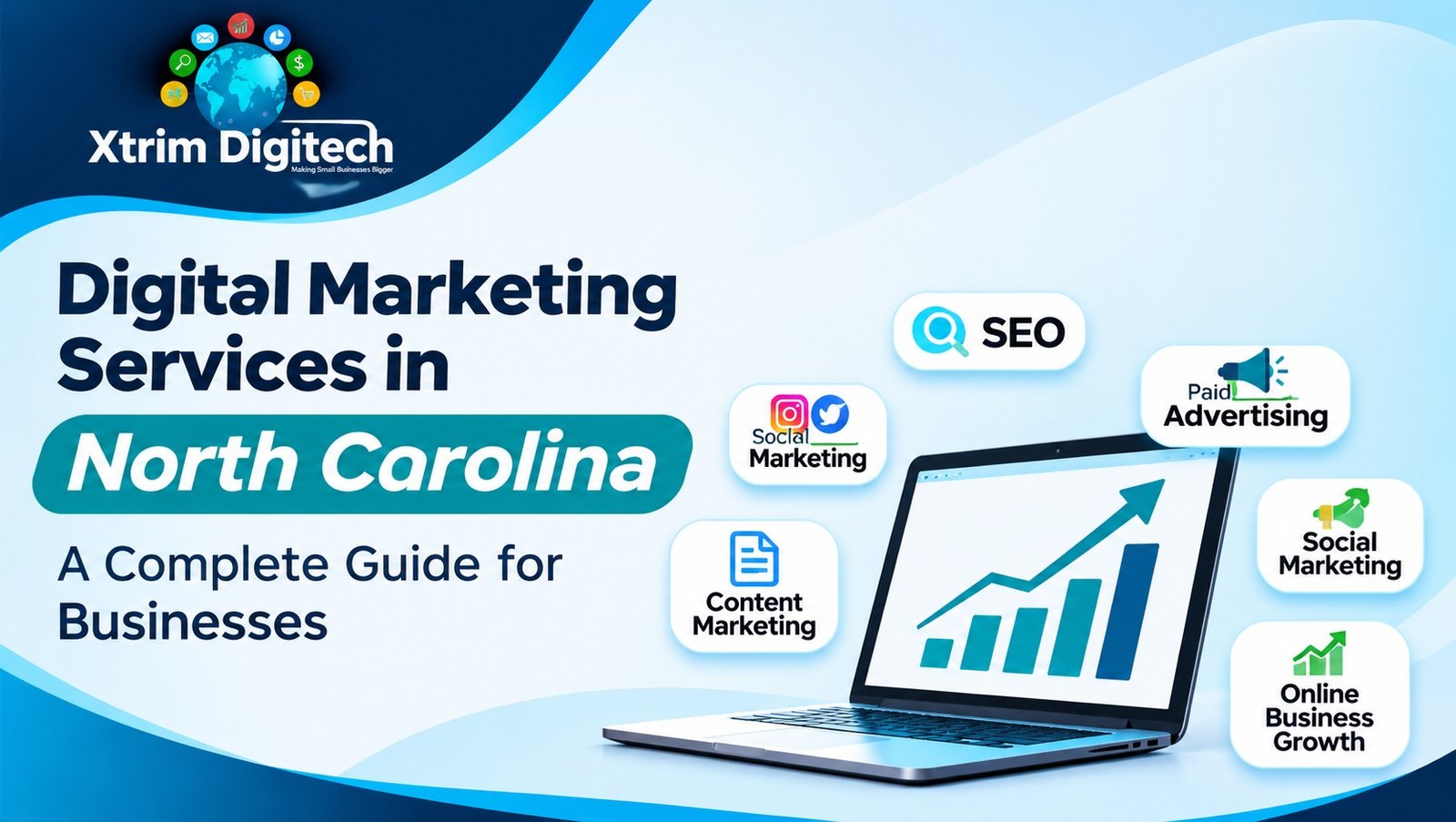
North Carolina has a diverse business environment, with opportunities across technology, healthcare, education, real estate, tourism, manufacturing, retail, and professional services. From growing companies in Charlotte and Raleigh to local businesses in Durham, Greensboro, Asheville, and Wilmington, businesses need a strong online presence to reach potential customers and remain competitive. Today, customers often search online before choosing a product, booking a service, or contacting a company. They compare websites, read reviews, check social media profiles, and evaluate search results before making decisions. Businesses that are difficult to find online may miss opportunities to connect with these potential customers.
This is where Digital Marketing Services in North Carolina can make a difference. A well-planned digital marketing strategy helps businesses improve search engine visibility, attract relevant website visitors, generate qualified leads, and build stronger relationships with their audiences. Digital marketing includes search engine optimization (SEO), local SEO, Google Ads, social media marketing, content marketing, website optimization, email marketing, and performance analytics. The right combination depends on a company’s industry, target audience, objectives, and budget. In this guide, we will explain the major digital marketing services available to North Carolina businesses, how to choose the right strategies, and how a consistent online marketing approach can support long-term business growth.
What Are Digital Marketing Services?
Digital marketing services help businesses promote their products, services, and brands through online channels. These services are designed to connect companies with people who are searching for relevant information, comparing solutions, or preparing to make a purchase. Unlike traditional advertising, digital marketing provides opportunities to measure campaign performance, understand customer behavior, and adjust strategies according to results.
For example, a home improvement company in Charlotte may use local SEO to appear in relevant search results, Google Ads to reach customers actively looking for renovation services, and social media content to showcase completed projects.
Common digital marketing services include:
- Search Engine Optimization (SEO): Improving a website’s visibility in organic search results.
- Local SEO: Helping businesses reach customers searching within specific cities or service areas.
- Google Ads: Running paid advertising campaigns for relevant search terms and audiences.
- Social Media Marketing: Building brand awareness and engaging customers on social platforms.
- Content Marketing: Publishing useful blogs, guides, landing pages, and other educational resources.
- Website Optimization: Improving website usability, speed, navigation, and conversion opportunities.
- Email Marketing: Communicating with subscribers through relevant updates and campaigns.
- Analytics and Reporting: Measuring traffic, leads, conversions, and marketing performance.
A successful digital marketing plan combines the services that support a company’s actual business objectives rather than using every channel without a clear purpose.

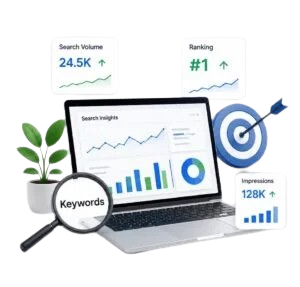
Grow Your Business with Local SEO That Delivers Results
Improve your Google rankings, optimize your Google Business Profile,
attract more local customers, and generate high-quality leads with
Xtrim Digitech's proven digital marketing strategies.
Grow Your Business with Local SEO That Delivers Results
Improve your Google rankings, optimize your Google Business Profile, attract more local customers, and generate high-quality leads with Xtrim Digitech's proven digital marketing strategies.
Why Do Businesses in North Carolina Need Digital Marketing?
North Carolina businesses operate in different markets, from major metropolitan areas to smaller communities and regional service areas. Their customers may discover them through Google searches, online reviews, social media, advertisements, or recommendations shared online. A consistent digital presence makes it easier for potential customers to find accurate information and understand what a business offers.
Improve Online Visibility
Search engines help customers discover businesses when they search for specific products or services. A well-optimized website can improve its chances of appearing for relevant searches. For example, a company offering professional services in Raleigh may create dedicated service pages that explain its offerings, service areas, and customer benefits.
Reach Relevant Customers
Digital advertising and audience targeting help businesses reach people based on their search intent, location, interests, or other permitted targeting criteria. This can make campaigns more relevant than broad advertising that reaches people who may have little interest in the business.
Generate Qualified Leads
Digital marketing can encourage potential customers to complete meaningful actions, such as submitting an inquiry form, requesting a quote, calling a business, or scheduling a consultation. The quality of these leads matters as much as the total number generated.
Build Trust and Credibility
An informative website, consistent business information, genuine customer reviews, and helpful content can strengthen a company’s credibility. Businesses should ensure that their online claims are accurate and that customer feedback is handled professionally.
Support Long-Term Growth
SEO and content marketing can build lasting visibility over time, while paid advertising can help businesses reach targeted audiences more immediately. Combining these channels can create a balanced marketing approach.
Key Goals of Digital Marketing
Before selecting marketing channels, businesses should identify what they want to achieve. Clear objectives help determine which activities deserve priority and how success should be measured.
Common goals include:
Brand awareness: Introduce a business to people who may not know about it yet.
Website traffic: Attract relevant visitors who are interested in the company’s services or information.
Lead generation: Encourage potential customers to request information, consultations, or estimates.
Online sales: Increase purchases through an e-commerce website or another measurable online sales process.
Local discovery: Help nearby customers find a business through local search results and relevant directories.
Customer retention: Maintain relationships with existing customers through useful communication and ongoing engagement.
For example, a new business may initially focus on awareness and local visibility. An established company may prioritize lead quality, customer retention, or improving the conversion rate of its existing website traffic.
The goals should be specific, measurable, realistic, and connected to the company’s broader business plans.
Understanding Your Target Audience
Effective digital marketing begins with understanding the people a business wants to reach. Businesses in North Carolina may serve local residents, regional customers, other companies, tourists, or customers across the United States. Each audience has different needs, preferences, and purchasing behaviors.
Identify Customer Needs
Consider the problems your customers are trying to solve. A person searching for an emergency repair service has a different level of urgency from someone researching a major home renovation.
Understanding these differences helps businesses create relevant landing pages, advertisements, and content.
Research Search Intent
Search intent describes what a person wants to accomplish through a search.
Common types include:
- Informational intent: Looking for answers, explanations, or guidance.
- Navigational intent: Trying to find a particular company or website.
- Commercial intent: Comparing products, services, or providers.
- Transactional intent: Preparing to purchase, book, or contact a business.
Content and campaigns should match the intent behind the keywords they target.
Segment Your Audience
Businesses can organize audiences according to location, service needs, industry, customer stage, or previous interactions. Use only appropriate data and follow applicable privacy requirements.
Audience segmentation allows companies to provide more relevant information instead of presenting the same message to every visitor.
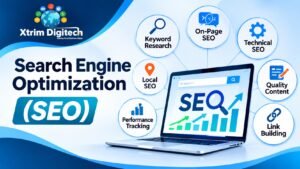
Search Engine Optimization (SEO)
Search engine optimization helps websites become more accessible, understandable, and relevant to search engines and users.
For businesses investing in Digital Marketing Services in North Carolina, SEO can support long-term organic visibility and attract visitors who are actively researching relevant products or services.
On-Page SEO
On-page SEO involves optimizing individual website pages. Important elements include:
- Relevant page titles and meta descriptions.
- Clear H1, H2, and H3 headings.
- Helpful, original content.
- Descriptive image alt text.
- Internal links between related pages.
- Clear URLs and logical page structure.
- Content that answers visitors’ questions.
Each page should have a clear purpose and provide useful information rather than repeating keywords unnecessarily.
Technical SEO
Technical SEO focuses on how search engines access, crawl, and understand a website. It may include improving crawlability, fixing broken links, managing redirects, reviewing XML sitemaps, addressing duplicate content, and implementing structured data where appropriate.
Off-Page SEO
Off-page SEO includes activities that support a website’s reputation and authority beyond its own pages. Examples include earning relevant editorial backlinks, building genuine industry relationships, and publishing resources that other websites find useful. Links should be earned through legitimate methods. Manipulative link schemes can create search visibility risks.
Local Keyword Research
Businesses should identify keywords that reflect their services and the areas they genuinely serve.
Examples include:
- Digital marketing agency in Charlotte, NC
- SEO services in Raleigh, NC
- Local SEO services in Durham, NC
- Digital marketing company in Greensboro, NC
- Google Ads management in Asheville, NC
These are example keyword ideas, not verified search-volume rankings. Keyword selection should be supported by research into relevance, competition, search intent, and business priorities.
Local SEO for North Carolina Businesses
Local SEO helps businesses become more discoverable to people searching for services in a specific geographic area. It can be particularly useful for contractors, healthcare practices, restaurants, retailers, legal practices, home service providers, and other businesses serving defined locations.
Optimize Your Google Business Profile
An eligible business can use its Google Business Profile to share important information, such as its name, address or service area, hours, phone number, website, and available services.
To maintain an accurate profile:
- Keep business information current.
- Select relevant business categories.
- Add genuine, high-quality photographs.
- Describe services accurately.
- Respond professionally to reviews.
- Follow Google’s guidelines for representing businesses.
- Avoid creating duplicate profiles or using misleading business information.
A complete profile can improve the information customers see when they discover a business on Google, although visibility and rankings are never guaranteed.
Create Relevant Location Pages
A business that genuinely serves multiple locations may benefit from dedicated location pages. Each page should provide useful, location-specific information, such as available services, coverage details, local contact information, and relevant customer questions.
Avoid creating large numbers of nearly identical pages that differ only by city name. Each page should offer meaningful value.
Maintain Consistent Business Information
Ensure that your business name, address, phone number, and website details are accurate across your website and important online directories.
For service-area businesses, represent the actual operating area correctly and follow the relevant platform guidelines.
Encourage Genuine Customer Reviews
Customer reviews help people evaluate a business before contacting it. Businesses can invite customers to leave honest feedback without offering prohibited incentives or selectively soliciting only positive reviews.
Thoughtful responses to feedback can also demonstrate that the company takes customer concerns seriously.
Google Ads and Pay-Per-Click Advertising
Google Ads allows businesses to display paid advertisements to relevant audiences. Search campaigns can be especially useful when potential customers are actively looking for a particular product or service.
For example, a commercial cleaning company serving Charlotte may target relevant searches from businesses in its actual service area.
Benefits of Google Ads
Google Ads can help businesses:
- Reach relevant search audiences.
- Promote specific services or offers.
- Direct visitors to dedicated landing pages.
- Control campaign budgets and bidding strategies.
- Measure calls, form submissions, purchases, and other conversions.
Advertising performance depends on factors such as competition, targeting, landing page quality, campaign structure, and the relevance of the offer.
Important Elements of a Successful Campaign
Keyword selection: Choose terms that reflect the services offered and the intent of potential customers.
Negative keywords: Exclude irrelevant searches that are unlikely to produce useful leads.
Ad copy: Explain the service clearly and provide an accurate reason for the customer to learn more.
Landing pages: Send visitors to a relevant page rather than automatically directing every campaign to the homepage.
Conversion tracking: Measure meaningful actions and verify that tracking is working correctly.
Ongoing optimization: Review search terms, costs, lead quality, and conversion data before making changes.
Paid advertising can generate visibility quickly, but it does not guarantee sales or profitable leads.
Social Media Marketing
Social media marketing helps businesses build awareness, communicate with audiences, share useful information, and maintain a recognizable brand identity.
The best platforms depend on the target audience and the type of business.
Select Suitable Platforms
- Facebook: Can support community engagement, local business updates, and relevant advertising campaigns.
- Instagram: Useful for visual storytelling, product displays, project photographs, and short videos.
- LinkedIn: Suitable for B2B businesses, professional services, recruitment, and industry insights.
- YouTube: Supports educational videos, product demonstrations, tutorials, and longer-form content.
- TikTok: May suit brands whose audiences engage with short-form video content.
Businesses do not need to maintain an active presence on every platform. It is generally more practical to focus on channels that support their objectives.
Create a Consistent Content Plan
A social media calendar can include educational posts, frequently asked questions, project updates, product explanations, team introductions, and relevant company news.
Content should provide value rather than consist entirely of sales messages.
Measure Engagement and Business Outcomes
Likes and views can indicate audience interest, but they do not necessarily represent business growth. Track relevant actions such as website visits, qualified inquiries, purchases, and assisted conversions where appropriate.
Content Marketing and Blogging
Content marketing involves creating and distributing useful information to attract, educate, and engage a target audience.
For North Carolina businesses, content can answer common customer questions, explain service options, clarify industry terminology, and demonstrate expertise.
Develop Useful Blog Topics
Potential blog topics depend on the business and its audience. Examples include:
- How to Choose a Digital Marketing Agency in Charlotte.
- Local SEO Tips for Small Businesses in Raleigh.
- How Businesses Can Improve Website Conversion Rates.
- A Guide to Google Ads Budget Planning.
- Common Website SEO Issues and How to Address Them.
These topics can attract readers at different stages of the buying journey.
Structure Content for Readability
A useful blog should include a descriptive title, a clear introduction, logical headings, concise paragraphs, relevant examples, and answers to common questions.
Use keywords naturally where they help readers understand the topic. Avoid keyword stuffing, repetitive wording, or unsupported claims.
Keep Content Accurate and Updated
Review older pages to identify outdated statistics, broken links, incorrect service information, and sections that no longer answer customer questions.
Updating content should improve its usefulness, not simply change the publication date.
Website Design and Optimization
A business website often serves as the main destination for people who discover a company through search engines, advertisements, or social media.
A well-designed website should help visitors quickly understand what the business offers and how to take the next step.
Essential Website Elements
A professional business website generally needs:
- Clear service descriptions.
- Easy-to-use navigation.
- Readable typography and consistent visual design.
- Relevant images and descriptive alt text.
- Accessible contact information.
- Functional inquiry forms.
- Trustworthy business information.
- Privacy information appropriate to the website’s activities.
- Secure HTTPS connections.
Improve Landing Pages
Each major service should have a page that explains the service, its relevance to the customer, and what the visitor can do next.
For example, a digital marketing company may create separate pages for SEO, Google Ads, content marketing, and social media services.
These pages can make campaigns more relevant and help visitors find information without navigating through unrelated content.
Build for Usability
Avoid confusing navigation, excessive pop-ups, unclear calls to action, and forms that request unnecessary information.
A website should guide users naturally from understanding a service to contacting the business or completing another meaningful action.
Email Marketing
Email marketing helps businesses communicate with people who have chosen to receive their messages. It can support customer retention, lead nurturing, event communication, and repeat purchases.
Common Email Campaign Types
Welcome emails: Introduce subscribers to the business and explain what they can expect.
Educational newsletters: Share helpful articles, industry updates, and practical advice.
Lead-nurturing emails: Provide relevant information to people considering a product or service.
Customer updates: Communicate service changes, appointments, or other useful information.
Re-engagement campaigns: Invite inactive subscribers to reconnect when appropriate.
Follow Email Best Practices
Use accurate sender information, clear subject lines, useful content, and an easy-to-find unsubscribe option. Obtain and manage consent appropriately, and follow applicable email marketing and privacy laws.
Measure delivery, clicks, conversions, unsubscribes, and other relevant indicators. Email open rates can be affected by privacy features and should not be treated as a complete measure of engagement.
Conversion Rate Optimization
Conversion rate optimization (CRO) focuses on increasing the proportion of website visitors who complete a desired action.
A conversion might be a completed inquiry form, a phone call, a booking, a subscription, or a purchase.
Identify Barriers to Conversion
Businesses can review website analytics, customer feedback, form completion rates, and user journeys to identify potential problems.
For example, visitors may leave a landing page because the service description is unclear, the page loads slowly, or the inquiry form requests too much information.
Test Improvements
CRO may involve testing different headlines, page layouts, button labels, forms, or supporting information. Changes should be evaluated using reliable data rather than assumptions alone.
The objective is to make the experience clearer and more useful for visitors while supporting measurable business outcomes.
Analytics and Performance Tracking
Analytics helps businesses understand how people find their websites, which pages they visit, and whether marketing activity contributes to business objectives.
Tools such as Google Analytics 4 and Google Search Console can provide useful information about website interactions and organic search performance.
Important Metrics to Monitor
Organic traffic: Visits from unpaid search results.
Paid traffic: Visits attributed to paid advertising.
Click-through rate: The proportion of impressions that result in clicks.
Conversion rate: The proportion of relevant visits or interactions that complete a defined action.
Cost per lead: Marketing spend divided by the number of leads generated, using a clearly defined attribution method.
Lead quality: How closely generated inquiries match the business’s target customers.
Return on advertising spend (ROAS): Revenue attributed to advertising divided by advertising spend, where revenue tracking is reliable.
Businesses should establish clear conversion definitions and verify their tracking setup. A rise in website traffic is not necessarily beneficial if the additional visitors are irrelevant or do not contribute to business goals.
Mobile Optimization and Website Speed
Many customers use smartphones to research services, compare providers, and contact businesses. A website that is difficult to use on mobile devices can create unnecessary friction.
Improve Mobile Usability
Ensure that text is readable, navigation works on smaller screens, buttons are easy to tap, and forms can be completed without excessive scrolling or zooming.
Important contact information should be easy to locate.
Improve Loading Performance
Potential improvements include compressing images, reducing unnecessary scripts, using efficient caching, and reviewing hosting performance.
Google’s Core Web Vitals provide useful measures of loading performance, responsiveness, and visual stability. Website speed is one part of a broader user experience and should be evaluated alongside content quality and usability.
Regular testing helps businesses identify technical issues before they affect a larger number of visitors.
Digital Marketing for Different Industries
Different industries require different marketing strategies. The services, messages, and conversion goals should reflect the way customers evaluate each type of business.
Healthcare and Professional Services
Healthcare practices and professional service providers can benefit from clear service pages, accurate business information, relevant educational content, and straightforward contact options.
Content should be accurate and compliant with applicable professional, privacy, and advertising requirements.
Real Estate
Real estate businesses can use location-specific pages, property information, video tours, and targeted campaigns to reach prospective buyers, sellers, or renters.
Listings and property details should remain current and accurate.
Home Services and Contractors
Contractors, plumbers, electricians, and other home service businesses can benefit from local SEO, service-area information, customer reviews, and landing pages explaining the services they provide.
Their online profiles should reflect their actual business locations and coverage areas.
Retail and E-Commerce
Retailers can use product pages, shopping campaigns where appropriate, social media content, email marketing, and analytics to help customers discover and purchase products.
Product information, pricing, availability, and delivery details should be accurate.
B2B Companies
Businesses selling to other companies may benefit from detailed service pages, case studies, educational resources, LinkedIn marketing, and lead-nurturing campaigns.
Because B2B buying decisions can involve multiple stakeholders, helpful information throughout the decision-making process is especially important.
Building a Digital Marketing Strategy
A digital marketing strategy should connect business objectives with a practical set of marketing activities.
Step 1: Audit Your Current Presence
Review the website, organic search visibility, business listings, social media accounts, existing campaigns, and conversion tracking.
Identify what is working and where the most important gaps exist.
Step 2: Set Measurable Goals
Define the results the business wants to achieve, such as qualified inquiries, online purchases, relevant website traffic, or improved conversion rates.
Establish a baseline so that future performance can be compared meaningfully.
Step 3: Research Keywords and Competitors
Identify relevant search terms, customer questions, competing offers, and content gaps.
Competitor research should help identify opportunities to provide more useful information, not encourage copying another company’s content.
Step 4: Choose Appropriate Channels
Select SEO, local SEO, Google Ads, social media, email marketing, or other channels according to the audience and objectives.
A small local business may begin with a strong website and local search presence, while a larger company may require a broader multi-channel plan.
Step 5: Create and Publish Useful Content
Develop service pages, blogs, landing pages, and social content that answer real customer questions.
Keep information consistent across marketing channels.
Step 6: Track and Improve Results
Review performance regularly, identify problems, and prioritize changes with a clear business rationale.
Digital marketing should be treated as an ongoing process of measurement and improvement rather than a one-time activity.
Common Digital Marketing Mistakes to Avoid
Even well-funded campaigns can underperform when their foundations are weak.
Targeting irrelevant keywords: Broad or unrelated keywords may generate traffic without meaningful business opportunities.
Ignoring local SEO: Businesses serving specific locations may miss relevant local discovery opportunities if their website and profiles are incomplete.
Using duplicate content: Repeating nearly identical content across pages can reduce usefulness and create SEO challenges.
Sending all visitors to the homepage: Campaigns often perform better when visitors arrive on pages relevant to their searches and advertisements.
Ignoring mobile users: Poor mobile navigation and slow pages can discourage visitors from completing important actions.
Failing to track conversions: Without reliable measurement, businesses may struggle to identify which campaigns contribute to leads or sales.
Expecting immediate SEO results: Organic search improvements often require consistent effort and time. Timelines vary according to competition, website condition, content quality, and other factors.
Buying fake reviews or links: Manipulative practices can undermine trust and violate platform policies.
Publishing content without a plan: Content should serve a defined audience need and support the business’s wider objectives.
Avoiding these mistakes helps businesses use their marketing resources more effectively.
How to Choose a Digital Marketing Agency
Choosing an agency is an important decision because the provider may influence the company’s website, advertising budget, online reputation, and lead generation process.
Businesses comparing Digital Marketing Services in North Carolina should evaluate providers according to their experience, communication, proposed strategy, and reporting practices.
Review Relevant Experience
Ask whether the agency understands your industry, target audience, and business model. Relevant experience can be useful, but a provider should also demonstrate how its proposed approach fits your specific requirements.
Understand the Proposed Strategy
A good proposal should explain the objectives, services, priorities, expected deliverables, measurement plan, and assumptions behind the recommendations.
Be cautious of guarantees of specific rankings, traffic levels, or revenue without a credible basis.
Evaluate Reporting and Communication
Ask how often performance will be reviewed, which metrics will be reported, and how the agency will explain underperformance.
You should understand what the agency is doing and how that work relates to your business goals.
Confirm Ownership and Access
The business should retain appropriate ownership and administrative access to its website, domain, advertising accounts, analytics properties, and business profiles.
Clarify account access, billing arrangements, reporting access, and what happens if the engagement ends.
Compare Value, Not Just Price
A lower fee does not automatically mean better value. Compare the scope of work, quality of execution, transparency, and relevance to your objectives.
The right agency should be able to explain its recommendations in clear, practical terms.
How Much Do Digital Marketing Services Cost?
The cost of digital marketing depends on the services required, the competitiveness of the market, the size of the website, campaign complexity, content requirements, and the amount of ongoing work.
Common pricing arrangements include monthly retainers, fixed project fees, hourly consulting, and advertising management fees.
For example, SEO may require technical improvements and ongoing content development, while a paid advertising project may involve campaign setup, landing page optimization, tracking, and continuous management.
Advertising spend is often separate from the agency’s management fee. Businesses should confirm exactly what is included before agreeing to a contract.
When evaluating a proposal, consider:
- The specific deliverables and work schedule.
- Whether content creation is included.
- Website development and maintenance requirements.
- Advertising spend and management fees.
- Analytics setup and reporting.
- Contract duration and cancellation terms.
- How results will be measured.
Rather than choosing a package based on price alone, establish a realistic budget based on business goals and the resources needed to pursue them.
Measuring Digital Marketing Success
Digital marketing performance should be evaluated against the outcomes that matter to the business.
A company focused on local lead generation may prioritize qualified calls, form submissions, and cost per qualified lead. An online store may focus on purchases, revenue, average order value, and contribution margin.
Establish a Baseline
Record current website traffic, lead volume, conversion rates, campaign costs, and other relevant metrics before making significant changes.
Use Consistent Reporting
Compare results over meaningful periods and account for seasonality, campaign changes, and other factors that may affect performance.
Evaluate Lead Quality
A campaign that generates many inquiries may still be inefficient if most inquiries are irrelevant or cannot become customers.
Where possible, connect marketing reporting with sales outcomes to understand the value of the leads generated.
Improve Based on Evidence
Use analytics and customer feedback to identify which pages, keywords, advertisements, and content types contribute to meaningful results.
Avoid making major decisions based on a single metric or a short period of incomplete data.
Why Consider Xtrim Digitech?
Xtrim Digitech is a digital marketing company that can be considered by businesses looking for support with online visibility, website content, SEO, and digital marketing activities.
For companies exploring Digital Marketing Services in North Carolina, the important consideration is whether a provider’s services, working process, communication, and experience match the business’s needs.
A digital marketing engagement may include areas such as:
- Search engine optimization and keyword research.
- Local SEO and business profile optimization.
- Website content planning and development.
- Blog writing and content marketing.
- Google Ads campaign planning and management.
- Social media content and marketing support.
- Website performance and conversion improvements.
- Analytics, reporting, and ongoing optimization.
The appropriate combination depends on the company’s goals and current online presence. Businesses should discuss their requirements, expected deliverables, budget, and measurement plan before selecting a service.
A structured approach can help businesses prioritize the most important opportunities, maintain consistent messaging, and make informed decisions about their digital marketing activities.
Key Takeaways: Digital Marketing in North Carolina
Digital marketing helps businesses connect with potential customers through search engines, paid advertising, social media, websites, and other online channels.
The main lessons from this guide are:
- Start with clear, measurable business objectives.
- Understand your audience and its search intent.
- Build a technically sound website with useful content.
- Use local SEO to support genuine service-area visibility.
- Choose advertising channels according to your goals and budget.
- Create content that answers relevant customer questions.
- Make the website easy to navigate on mobile and desktop devices.
- Track qualified leads and business outcomes rather than traffic alone.
- Review performance regularly and improve based on evidence.
- Select a digital marketing provider with transparent processes and relevant expertise.
A consistent strategy is more valuable than using multiple channels without coordination. Businesses should focus on activities that address their customers’ needs and contribute to their long-term objectives.
Frequently Asked Questions - Digital marketing services in North Carolina
1. What are digital marketing services in North Carolina?
Digital marketing services in North Carolina include SEO, local SEO, Google Ads, social media marketing, content marketing, website optimization, email marketing, and analytics. Businesses use these services to improve online visibility, reach relevant audiences, and generate leads or sales.
2. Why is digital marketing important for North Carolina businesses?
3. Which digital marketing services are best for small businesses?
4. How does local SEO help businesses in North Carolina?
5. Is Google Ads better than SEO?
6. How long does SEO take to show results?
7. How much should a business spend on digital marketing?
8. Does social media marketing help generate leads?
9. How can a business measure digital marketing performance?
10. How do I choose a digital marketing agency?
Frequently Asked Questions - Digital marketing services in North Carolina
Digital marketing services in North Carolina include SEO, local SEO, Google Ads, social media marketing, content marketing, website optimization, email marketing, and analytics. Businesses use these services to improve online visibility, reach relevant audiences, and generate leads or sales.
Conclusion: Building a Strong Digital Presence in North Carolina
A strong digital presence helps businesses make it easier for customers to discover their services, understand their value, and take the next step. Whether a company operates in Charlotte, Raleigh, Durham, Greensboro, Asheville, Wilmington, or another North Carolina community, its marketing strategy should reflect its actual audience and business objectives. SEO, local SEO, Google Ads, social media marketing, content creation, website optimization, and analytics can each contribute to a broader digital marketing plan. The most effective approach depends on selecting the right services, implementing them consistently, and reviewing performance using meaningful data.
Businesses should begin by assessing their current online presence, identifying their most important growth opportunities, and setting measurable goals. From there, they can prioritize improvements, develop relevant content, and refine campaigns as they learn more about their customers. With clear objectives, accurate information, useful content, and ongoing optimization, businesses can build a more consistent online presence and make better-informed digital marketing decisions over time.