
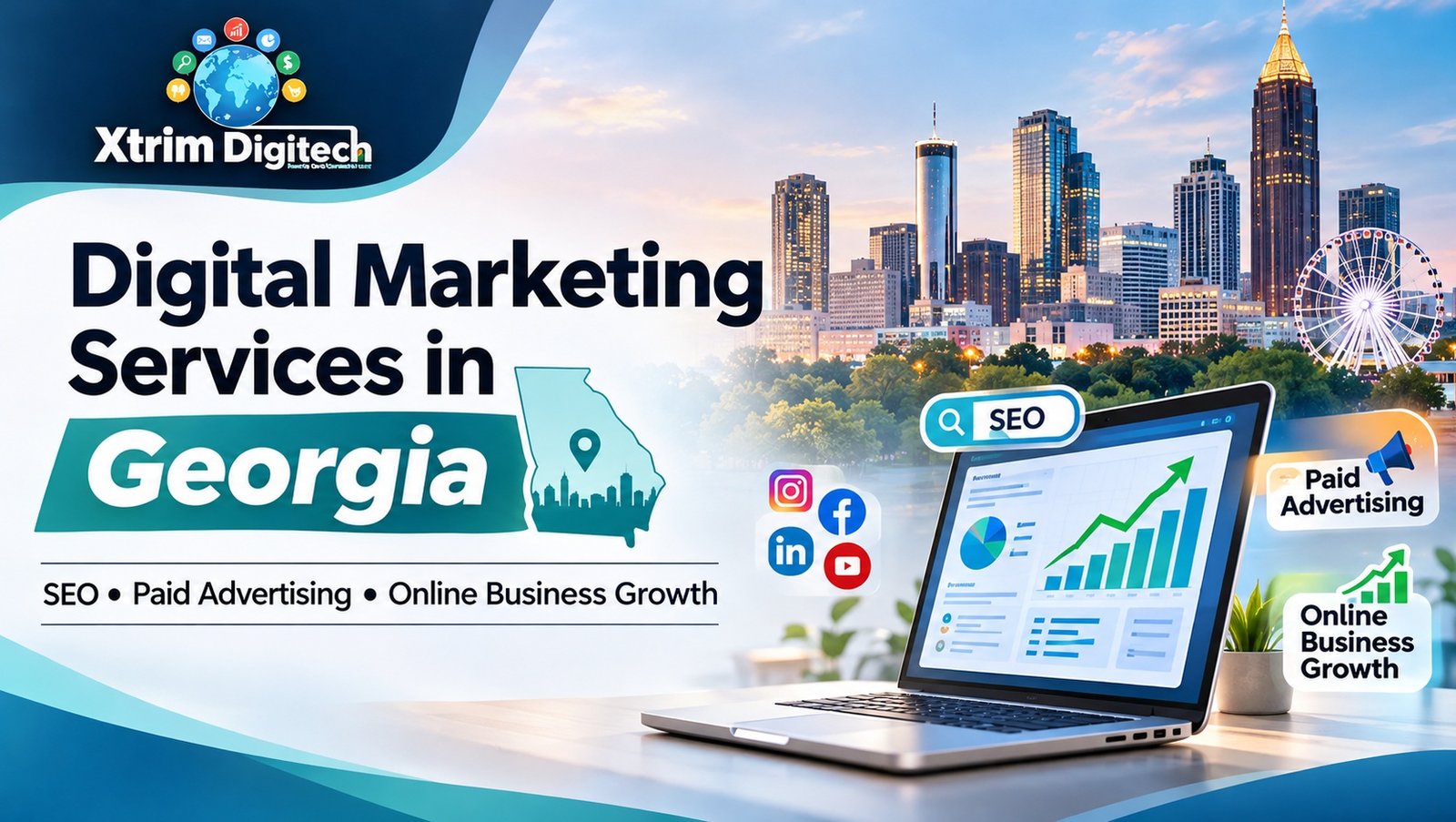
Growing a business in today’s competitive digital environment requires more than a website or occasional social media posts. Businesses need a well-planned strategy to reach potential customers, communicate their services, build brand awareness, and generate relevant enquiries. Georgia, USA, has diverse business markets, from Atlanta’s metropolitan area to Savannah, Augusta, Columbus, Athens, and Macon. Each market may have different customer needs, competitors, and marketing opportunities. Professional Digital Marketing Services in Georgia can help businesses strengthen their online presence through search engine optimization (SEO), local SEO, Google Ads, social media marketing, content marketing, website optimization, email marketing, and performance tracking.
Whether you operate a small local business, a professional service company, a healthcare practice, a retail store, or an e-commerce brand, selecting suitable digital marketing channels can help you connect with your target audience more effectively. Xtrim Digitech provides digital marketing services across SEO, local SEO, Google Ads, social media marketing, and content marketing. This guide explains how businesses can understand these services, choose appropriate strategies, and measure their online marketing performance.
Why Businesses in Georgia Need Digital Marketing
Customers frequently use search engines, social media platforms, business websites, online reviews, and digital advertisements to research products and services before making purchasing decisions. For businesses operating in Georgia, online visibility can be particularly important when competing within specific cities, neighbourhoods, and service areas. A company serving Atlanta may face different competitive conditions from a business targeting Savannah, Augusta, Columbus, or Athens.
A well-planned digital marketing strategy can help businesses:
-
Improve online visibility.
-
Reach relevant potential customers.
-
Attract qualified website traffic.
-
Generate enquiries and sales opportunities.
-
Build brand awareness.
-
Promote products and services.
-
Improve customer engagement.
-
Measure marketing performance.
-
Strengthen customer relationships.
-
Identify opportunities for business growth.
For example, a local restaurant may benefit from local SEO, accurate business listings, and social media content. A consulting company may prioritize informative articles, organic search visibility, and lead generation. An online store may focus on product SEO, paid advertising, email marketing, and conversion optimization. The right approach depends on the business’s goals, audience, competition, and available budget. Professional Digital Marketing Services in Georgia can help businesses evaluate these factors and select suitable channels.

Grow Your Business with Local SEO That Delivers Results
Improve your Google rankings, optimize your Google Business Profile,
attract more local customers, and generate high-quality leads with
Xtrim Digitech's proven digital marketing strategies.
Grow Your Business with Local SEO That Delivers Results
Improve your Google rankings, optimize your Google Business Profile, attract more local customers, and generate high-quality leads with Xtrim Digitech's proven digital marketing strategies.
What Are Digital Marketing Services?
Digital marketing refers to promoting a business, product, or service through online channels. These channels help businesses connect with potential customers at different stages of their purchasing journey.
Common digital marketing services include:
-
Search Engine Optimization (SEO)
-
Local SEO
-
Google Ads and pay-per-click advertising
-
Social media marketing
-
Content marketing
-
Website design and optimization
-
Email marketing
-
Conversion rate optimization
-
Analytics and performance reporting
-
Online reputation management
Each service has a different purpose.
SEO helps improve organic search visibility, while paid advertising can provide visibility for selected searches and audiences. Social media marketing supports brand communication and audience engagement. Content marketing provides useful information, and website optimization helps visitors navigate a business’s services and take meaningful actions. When these channels are planned together, they can create a more consistent digital marketing strategy.
How to Set Clear Digital Marketing Goals
Before investing in marketing services, businesses should identify the outcomes they want to achieve. Clear goals help determine which channels to prioritize and how to measure progress.
Increase Website Traffic
Some businesses want to attract more visitors through organic search, paid advertising, social media, and informative content. However, traffic growth is valuable only when visitors are relevant to the business and its services.
Generate Qualified Leads
Service-based businesses may focus on calls, enquiry forms, consultation requests, appointment bookings, or quotation requests. Lead quality should be measured alongside lead volume to understand whether campaigns are attracting potential customers who fit the business’s requirements.
Increase Sales and Revenue
E-commerce businesses and product-based companies may track online sales, average order value, customer acquisition cost, and return on advertising spend.
Improve Brand Awareness
Businesses entering a new market may need to introduce their services, explain their value, and build recognition among potential customers.
Retain Existing Customers
Email newsletters, relevant updates, helpful resources, and appropriate follow-up communication can help businesses maintain relationships with existing customers. When selecting digital marketing services in Georgia, businesses should prioritize specific, measurable goals that align with their commercial objectives.
Understanding Your Target Audience
An effective digital marketing strategy begins with understanding the people a business wants to reach. Without audience research, companies may spend money on campaigns that attract visitors who are unlikely to become customers.
Important audience considerations include:
-
Geographic location and service area.
-
Customer needs and challenges.
-
Relevant demographics.
-
Interests and preferences.
-
Search behaviour.
-
Purchasing motivations.
-
Budget considerations.
-
Preferred communication channels.
For example, a company targeting customers in downtown Atlanta may need a different local marketing approach from a business serving residential customers in Marietta or Roswell. Similarly, a B2B company targeting business decision-makers may require a different content strategy from a retail brand selling directly to consumers. Audience research helps businesses select relevant keywords, develop useful content, choose advertising platforms, and communicate their services more clearly.
Why SEO Services Matter for Business Growth
Search Engine Optimization (SEO) involves improving a website so that it can be discovered more effectively through relevant organic search results. When people search for products, services, or information, they often compare several websites before deciding which businesses to consider. SEO can help a business improve its visibility for searches related to its offerings.
Keyword Research
Keyword research identifies the phrases potential customers use when searching online.
Businesses targeting Georgia may consider relevant keywords such as:
-
Digital Marketing Services in Georgia
-
Digital Marketing Agency in Georgia
-
SEO Services in Georgia
-
SEO Company in Georgia
-
Local SEO Services in Georgia
-
Social Media Marketing in Georgia
-
Google Ads Management in Georgia
These keywords should be selected according to the business’s services, target locations, competition, and search intent. Search volume and competitiveness should be checked using appropriate keyword research tools rather than assumed.
On-Page SEO
On-page SEO involves optimizing website elements such as:
-
Page titles and meta descriptions.
-
Headings and page structure.
-
Relevant keywords.
-
Internal links.
-
Image alt text.
-
URL structure.
-
Service page content.
Each important page should explain its subject clearly and provide useful information for visitors.
Content Optimization
Service pages, informative blog posts, guides, and FAQs can answer customer questions and support relevant organic search visibility. Content should be accurate, original, easy to understand, and written for the intended audience.
Link and Authority Development
Relevant links from trustworthy websites can help users discover content and provide additional context about a website’s reputation. Link-building activities should prioritize genuine relevance and quality rather than artificial link schemes. SEO is generally a long-term activity. Rankings, traffic, and conversions are not guaranteed because results depend on competition, website quality, search demand, and other factors.
How Local SEO Helps Georgia Businesses
Local SEO is useful for businesses that serve customers in particular cities or geographic areas. Examples include healthcare practices, restaurants, retail stores, law firms, home service providers, salons, and professional service companies.
Local SEO activities may include:
-
Google Business Profile optimization.
-
Accurate business information.
-
Local keyword research.
-
Relevant location-specific pages.
-
Customer review management.
-
Consistent business listings.
-
Locally relevant content.
-
Accurate website contact information.
Google Business Profile Optimization
An eligible business can use its Google Business Profile to display relevant information in Google Search and Google Maps. Businesses should keep their operating hours, contact details, categories, services, and other profile information accurate. Reviews should be managed professionally, and businesses should follow Google’s profile guidelines.
Location-Specific Website Pages
A business serving several Georgia cities may benefit from distinct location pages when it has genuinely relevant information for each area. For example, a company serving Atlanta, Savannah, and Augusta can explain its services and relevant coverage for each market. However, simply creating many nearly identical pages with different city names may provide little value. Each page should serve a real user need.
Local Keyword Targeting
Relevant searches might include “SEO services in Atlanta,” “digital marketing company in Savannah,” or “local SEO services in Augusta.” Businesses should use location keywords naturally in useful website content rather than repeating them excessively. A well-planned local SEO strategy can help businesses improve their local online presence while providing clearer information to potential customers.
How Google Ads Can Generate Relevant Leads
Google Ads allows businesses to advertise through Google’s advertising network and reach users based on factors such as search queries, campaign settings, locations, and audience signals. Paid advertising may be useful when a business wants to promote a particular service, test market demand, or reach potential customers searching for specific solutions.
Search Advertising
Search campaigns can display advertisements for selected search queries. For example, a professional service company may target relevant searches from customers within its actual service area.
Display and Video Advertising
Display and video campaigns can help businesses introduce their brands, communicate product information, and reach selected audiences across supported placements.
Remarketing
Where permitted by applicable privacy rules and platform requirements, remarketing can help businesses reconnect with eligible audiences who previously interacted with their website or content.
Campaign Optimization
Effective campaign management involves more than launching advertisements. Businesses should monitor:
-
Advertising spend.
-
Search terms and audience relevance.
-
Click-through rate.
-
Conversion rate.
-
Cost per lead.
-
Qualified enquiries.
-
Sales and revenue.
-
Return on advertising spend.
For example, a campaign may receive many clicks but generate few relevant enquiries. This could indicate problems with targeting, advertising messages, landing page relevance, or the enquiry process. Google Ads management in Georgia should therefore focus on meaningful business outcomes rather than clicks and impressions alone.
Why Social Media Marketing Is Important
Social media platforms help businesses communicate with customers, share useful information, introduce products, and maintain a consistent brand presence.
Social media marketing may involve:
-
Content planning.
-
Graphic design and creative development.
-
Short-form videos.
-
Educational posts.
-
Community engagement.
-
Paid social campaigns.
-
Audience research.
-
Performance reporting.
Choosing Suitable Platforms
The appropriate platform depends on the target audience and business model. For example, a fashion retailer may benefit from visual content, while a B2B consulting firm may prioritize professional insights and industry discussions. Restaurants may use photographs, videos, menu information, and updates relevant to their customers.
Maintaining Consistent Communication
Businesses should publish content that reflects their brand identity and provides genuine value. Useful content may include product demonstrations, answers to frequently asked questions, company updates, educational posts, and behind-the-scenes information.
Measuring Social Media Performance
Businesses can monitor engagement, reach, website visits, enquiries, and conversions where suitable tracking is available. Social media marketing in Georgia should reflect the audience’s interests, the company’s services, and its overall marketing objectives.
How Content Marketing Builds Online Visibility
Content marketing involves creating and distributing useful information to attract, educate, and engage relevant audiences. Instead of relying exclusively on advertisements, businesses can publish content that answers customer questions and helps people understand their available options.
Common content formats include:
-
Blog articles.
-
Service pages.
-
Frequently asked questions.
-
Educational guides.
-
Case studies.
-
Videos.
-
Infographics.
-
Email newsletters.
-
Social media posts.
Create Content Around Customer Questions
Businesses should identify the questions potential customers ask before purchasing a product or service. For example, a digital marketing company may publish articles about SEO, Google Ads, local search optimization, social media strategy, website performance, and campaign measurement.
Build Relevant Topic Coverage
Related blog posts can explore different aspects of a subject and link to relevant service pages when useful. This helps readers find additional information and creates a more organized website experience.
Prioritize Accuracy and Originality
Content should provide meaningful information instead of repeating generic statements to increase word count. Businesses should review facts, use clear language, and update articles when necessary.
Measure Content Performance
Useful metrics may include organic traffic, engaged sessions, enquiry submissions, assisted conversions, and the relevance of visitors attracted by individual pages. Content marketing can support SEO by answering customer questions and strengthening the topical relevance of a website.
Why Website Design and Optimization Matter
A business website often serves as the main destination for visitors who discover the company through search engines, advertisements, social media, email, or referrals. Even a well-targeted marketing campaign may perform poorly if the website does not explain the business’s value or make it easy for visitors to take the next step.
A business website should include:
-
Clear information about products and services.
-
Easy-to-use navigation.
-
Responsive mobile design.
-
Relevant images and content.
-
Visible contact information.
-
Functional enquiry forms.
-
Appropriate trust information.
-
Secure connections.
-
Reliable page performance.
-
Clear calls to action.
Mobile-Friendly Website Design
Visitors should be able to navigate the website, read content, access important information, and submit enquiries using mobile devices.
Clear Service Pages
Each major service should have a page that explains what the business offers, who the service is suitable for, and what customers can expect.
Website Speed and Usability
Slow pages, broken links, difficult navigation, and confusing forms can create friction for visitors. Website optimization should consider performance, accessibility, readability, and privacy requirements. Businesses may need website design, development, or conversion optimization alongside their digital marketing campaigns to improve the overall customer journey.
How Email Marketing Supports Customer Relationships
Email marketing allows businesses to communicate with people who have subscribed or otherwise provided appropriate permission for relevant messages. It can support customer education, product updates, service announcements, and customer retention.
Welcome Emails
Welcome messages introduce the business, explain what subscribers can expect, and provide useful starting information.
Educational Newsletters
Businesses can share relevant articles, guides, industry updates, and practical advice that helps subscribers understand their products or services.
Follow-Up Communication
Where appropriate, follow-up messages can help customers continue a purchase or enquiry process.
Customer Retention
Existing customers may receive relevant service information, useful resources, and updates based on their preferences and consent. Email campaigns should include accurate sender information, appropriate unsubscribe options, and responsible handling of personal data. Businesses should also follow applicable privacy and anti-spam laws. Email marketing works best when communication is relevant to recipients rather than sent indiscriminately to large lists.
Why Conversion Rate Optimization Matters
Digital marketing is not only about attracting website visitors. Businesses must also understand whether those visitors take meaningful actions. Conversion Rate Optimization (CRO) focuses on improving the percentage of visitors who complete a desired action.
Depending on the business, conversions may include:
-
Submitting an enquiry form.
-
Requesting a quotation.
-
Calling the business.
-
Booking an appointment.
-
Completing an online purchase.
-
Registering for a service.
-
Downloading a useful resource.
Improve Landing Page Relevance
The landing page should match the advertisement, search query, or content that brought the visitor to the website.
Simplify Forms
Forms should request only the information necessary for their intended purpose. Unnecessary fields may discourage visitors from completing them.
Make Calls to Action Clear
Visitors should understand what happens when they click a button or submit a form.
Improve Mobile Usability
Buttons, menus, images, and forms should work properly on smaller screens.
Test Changes Carefully
Businesses can test suitable variations in page layout, content, forms, and calls to action to understand which changes improve performance. CRO can help businesses make better use of existing traffic by improving the experience of visitors who are already interested in their offerings.
How Analytics Helps Measure Marketing Performance
Analytics helps businesses understand where website visitors come from, how they interact with content, and which marketing activities contribute to business outcomes.
Useful metrics may include:
| Metric | What It Measures |
|---|---|
| Organic traffic | Visits from unpaid search results |
| Paid traffic | Visits generated through paid advertising |
| Conversion rate | Percentage of visitors completing a defined action |
| Cost per lead | Advertising cost associated with generating a lead |
| Qualified leads | Leads that meet the business’s defined criteria |
| Customer acquisition cost | Cost associated with acquiring a customer |
| Return on ad spend | Revenue attributed to advertising relative to ad spend |
| Engagement metrics | How visitors interact with website content |
| Email engagement | How recipients interact with email campaigns |
Businesses should define conversion events accurately and configure tracking appropriately. For example, an enquiry form should be recorded as a lead only when the tracking setup reflects a genuine completed enquiry. Duplicate events or incorrect tracking can distort reports. Analytics reports should connect marketing activities with business objectives. High traffic or large numbers of impressions do not necessarily mean that a campaign is producing valuable customers. Regular performance reviews can help businesses identify opportunities, address underperforming campaigns, and improve future marketing decisions.
How to Choose a Digital Marketing Agency in Georgia
Choosing a marketing partner requires more than comparing service lists or monthly fees. Businesses should evaluate the provider’s strategy, relevant experience, communication, reporting, and understanding of their objectives.
Review Relevant Experience
Look for examples of work related to your industry, audience, or marketing requirements. Where case studies are available, examine the objectives, activities, measurement methods, and reported outcomes.
Understand the Services Offered
Determine whether the agency provides the services your business actually needs, such as SEO, local SEO, paid advertising, content marketing, social media marketing, or website optimization.
Evaluate the Strategy
Ask how the agency will identify priorities, research competitors, select channels, and define success. A suitable provider should explain why particular activities are recommended.
Ask About Reporting
Understand which metrics will be reported, how frequently reports will be shared, and how performance will influence future decisions.
Confirm Budget and Scope
Clarify management fees, advertising spend, third-party expenses, deliverables, timelines, and responsibilities before beginning the project.
Check Communication and Account Access
Businesses should retain appropriate ownership and access to their websites, advertising accounts, analytics data, and other important digital assets.
Avoid Unrealistic Guarantees
SEO rankings, lead volumes, and revenue outcomes depend on multiple factors. Be cautious of guarantees that do not explain the assumptions, measurement methods, or limitations involved. When comparing a Digital Marketing Agency in Georgia, choose a provider that communicates clearly and connects its proposed work with measurable business objectives.
How Much Should Businesses Invest in Digital Marketing?
There is no single marketing budget suitable for every business. The appropriate investment depends on the company’s size, industry, competition, geographic coverage, objectives, and available resources.
Important considerations include:
-
Business size and growth stage.
-
Industry competition.
-
Target audience.
-
Geographic coverage.
-
Marketing objectives.
-
Existing website quality.
-
Advertising requirements.
-
Content production needs.
-
Customer acquisition costs.
-
Available internal resources.
A business focused on long-term organic visibility may prioritize SEO and content marketing. A company testing immediate market demand may allocate part of its budget to paid advertising. An established e-commerce business may need a combination of paid media, product SEO, email marketing, and conversion optimization.
Businesses should distinguish between agency management fees and advertising spend. They should also account for website development, content production, software, and other relevant expenses. A practical approach is to set an initial budget, define measurable goals, monitor performance, and adjust spending based on evidence rather than assumptions.
Common Digital Marketing Mistakes to Avoid
Businesses can lose time and resources when marketing activities are not aligned with their objectives.
Choosing Services Without a Strategy
Using several channels without understanding their purpose can spread budgets and resources too thinly.
Targeting the Wrong Audience
Broad targeting may generate traffic or engagement without attracting relevant potential customers.
Expecting Immediate SEO Results
Organic search visibility usually requires ongoing work. Results can vary according to competition, website conditions, and the quality of implementation.
Focusing Only on Vanity Metrics
Impressions, likes, and clicks provide useful context, but they do not necessarily demonstrate commercial success.
Ignoring Website Performance
Slow pages, unclear messaging, broken forms, and difficult navigation can reduce the effectiveness of marketing campaigns.
Publishing Low-Quality Content
Content should answer genuine questions and provide value rather than simply repeat keywords.
Failing to Track Conversions
Without appropriate tracking, businesses may struggle to identify which campaigns generate qualified leads or sales.
Neglecting Existing Customers
Marketing strategies should consider customer retention and relationships as well as new customer acquisition. Avoiding these mistakes can help businesses create a more focused, measurable digital marketing process.
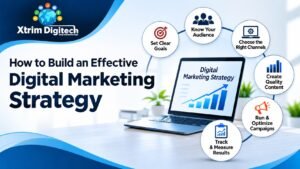
How to Build an Effective Digital Marketing Strategy
Businesses can follow a structured process to plan, implement, and improve their marketing activities.
Step 1: Define Business Objectives
Identify whether the main priority is brand awareness, website traffic, leads, sales, customer retention, or another measurable outcome.
Step 2: Research the Market
Understand the target audience, competitors, customer needs, geographic market, and relevant search behaviour.
Step 3: Audit the Existing Digital Presence
Review the website, search visibility, Google Business Profile where applicable, social media accounts, advertising campaigns, and analytics.
Step 4: Select Priority Channels
Choose the channels that best support the objectives and available budget.
Step 5: Create a Content and Campaign Plan
Develop relevant service pages, articles, social media content, advertising messages, and landing pages according to the selected strategy.
Step 6: Configure Measurement
Set up appropriate analytics, conversion tracking, and reporting to measure meaningful results.
Step 7: Launch and Monitor
Implement the planned activities and review performance regularly.
Step 8: Improve Based on Evidence
Use the results to refine targeting, content, landing pages, budgets, and channel priorities. This process can help businesses approach Digital Marketing Services in Georgia with clearer expectations and a stronger focus on measurable outcomes.
How Xtrim Digitech Supports Digital Marketing Goals
Xtrim Digitech is a digital marketing company based in Indore, India. The company works across digital marketing service areas that include SEO, local SEO, Google Ads, social media marketing, and content marketing. For businesses exploring online growth, a connected strategy can help bring different marketing activities together.
For example, SEO can support organic search visibility, while content marketing can provide useful information for potential customers. Paid advertising can help reach selected audiences, and website optimization can improve the experience of visitors who arrive through different channels. Local SEO may also be relevant for businesses targeting specific geographic markets, provided their location and service-area information accurately reflects their operations.
When planning marketing activities for Georgia, businesses should consider local competition, audience behaviour, advertising costs, search intent, and the resources required to manage campaigns. Xtrim Digitech can be considered by businesses evaluating digital marketing support across these areas. Before beginning a project, businesses should confirm the services available, proposed scope, communication arrangements, reporting methods, and experience relevant to their requirements. The objective should be to select marketing activities that align with business goals rather than applying the same package to every company.
Key Takeaways
Digital marketing can help businesses build online visibility, reach relevant audiences, and measure performance when activities are planned around clear objectives.
The main points to remember are:
-
Define business goals before selecting marketing channels.
-
Understand your target audience and its needs.
-
Use SEO to support relevant organic search visibility.
-
Consider local SEO when serving specific geographic areas.
-
Use Google Ads strategically and monitor lead quality.
-
Create useful content that answers customer questions.
-
Choose social media platforms according to audience behaviour.
-
Maintain a clear, responsive, and user-friendly website.
-
Use email marketing responsibly to support customer relationships.
-
Track leads, sales, and other meaningful outcomes.
-
Evaluate agencies based on strategy, transparency, and relevant experience.
-
Review performance regularly and improve activities using data.
A well-planned digital marketing strategy can help businesses strengthen their online presence and make informed decisions about their marketing investments.
Frequently Asked Questions - Digital marketing services in Georgia
1. What are Digital Marketing Services in Georgia?
Digital marketing services in Georgia include SEO, local SEO, Google Ads, social media marketing, content marketing, email marketing, website optimization, and analytics. The appropriate services depend on the business's goals, audience, and marketing requirements.
2. Which digital marketing services are useful for small businesses in Georgia?
3. How can SEO help a business grow online?
4. Is Google Ads suitable for businesses in Georgia?
5. How does local SEO help businesses in Georgia?
6. How long does digital marketing take to show results?
7. How much do digital marketing services cost in Georgia?
8. Why is website optimization important for digital marketing?
9. How can businesses measure digital marketing success?
10. How can Xtrim Digitech support a business's online presence?
Frequently Asked Questions - Digital marketing services in Georgia
Digital marketing services in Georgia include SEO, local SEO, Google Ads, social media marketing, content marketing, email marketing, website optimization, and analytics. The appropriate services depend on the business's goals, audience, and marketing requirements.
Conclusion: Building a Stronger Online Presence
Growing a business online requires a clear understanding of the target audience, a well-defined marketing strategy, and consistent attention to performance. Businesses operating in Georgia can consider several digital marketing channels, including SEO, local SEO, Google Ads, social media marketing, content marketing, email marketing, and website optimization. Each channel serves a different purpose, so the right combination depends on the business’s objectives, budget, industry, and customers.
Professional Digital Marketing Services in Georgia can help businesses evaluate these opportunities, develop a suitable plan, and measure the effectiveness of their marketing activities. However, meaningful progress also depends on useful content, accurate tracking, clear communication, and regular improvements.
Xtrim Digitech provides digital marketing services across SEO, local SEO, Google Ads, social media marketing, and content marketing. Businesses considering digital marketing support can evaluate their requirements and confirm the appropriate scope before starting a project. By understanding customer needs, selecting relevant channels, improving the website experience, and reviewing results regularly, businesses can build a stronger digital presence and make better-informed marketing decisions over time.