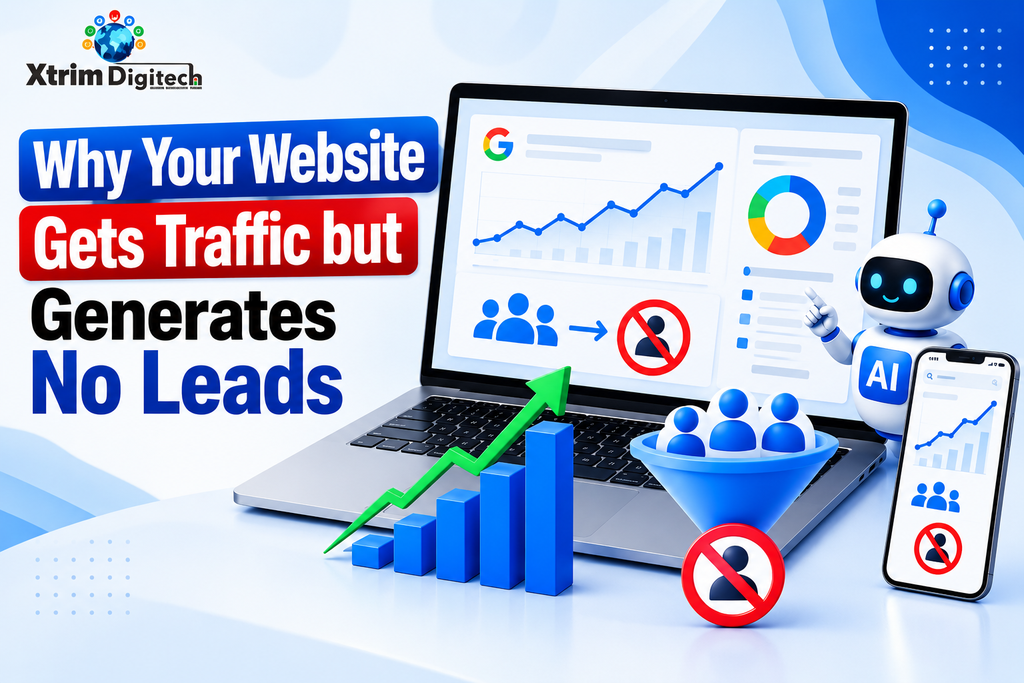











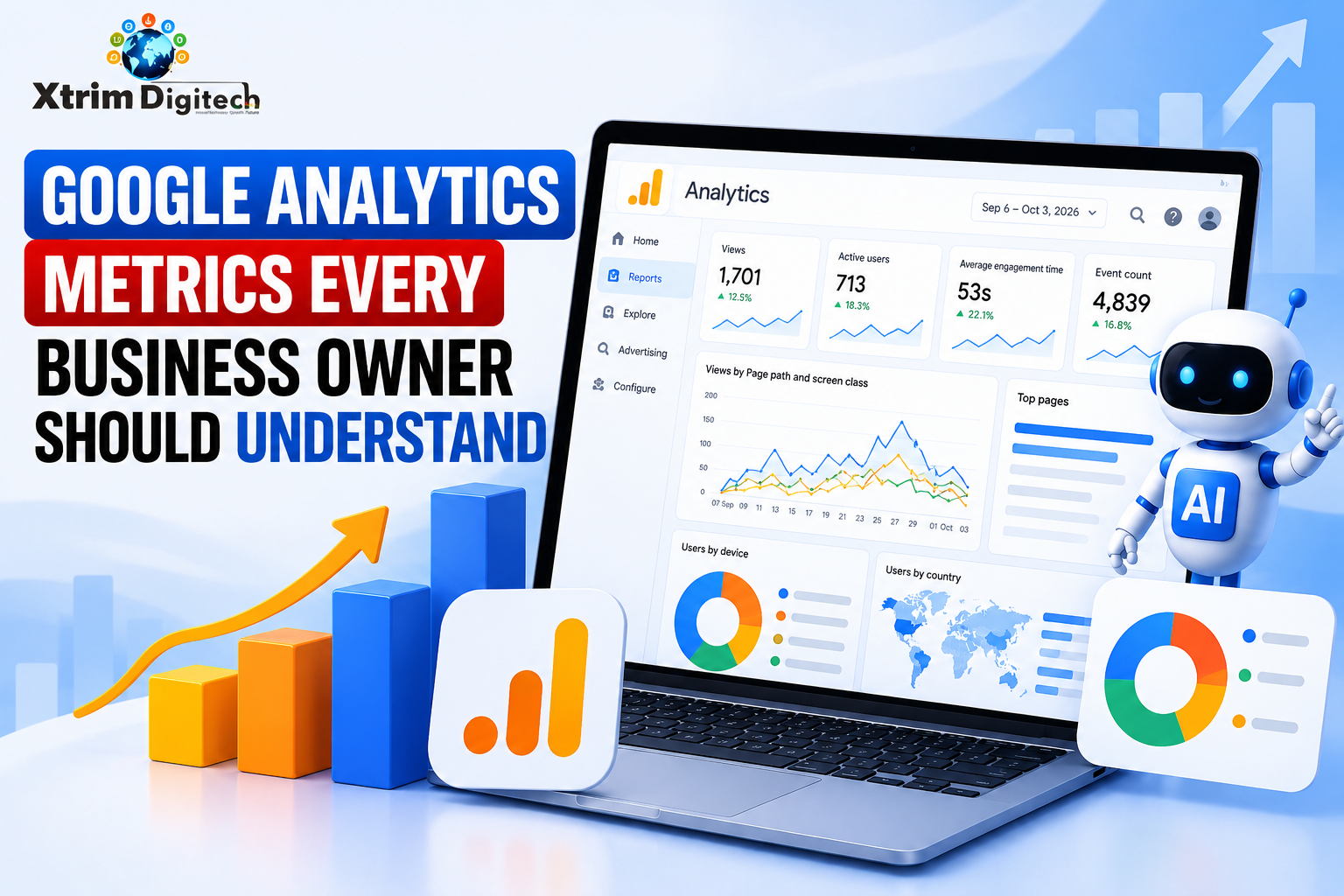
A website can receive thousands of visitors, but traffic numbers alone cannot explain whether a business is actually achieving its digital goals. Business owners need to understand where visitors come from, which pages they view, how they interact with the website, and whether those interactions lead to enquiries, purchases, calls, or other valuable actions. This is where Google Analytics Metrics become important.
Google Analytics provides businesses with data about website users, traffic sources, engagement, events, conversions, devices, and other aspects of online behaviour. Understanding this information can help business owners identify what is working and where improvements may be required.
For businesses investing in Digital Marketing Services in Indore, analytics can also help connect marketing activities with measurable website outcomes. Instead of relying only on assumptions, businesses can use data to understand visitor behaviour and make more informed decisions about SEO, content, advertising, website design, and conversion optimization.
What Are Google Analytics Metrics?
Google Analytics Metrics are measurable values that help businesses understand how users interact with their websites and digital properties.
These metrics can provide information about the number of users, sessions, views, engagement, traffic sources, events, conversions, devices, and locations.
However, individual metrics should not be viewed in isolation. A high number of visitors may look positive, but if those visitors do not engage with the website or complete important actions, the business may need to investigate further.
The purpose of analytics is therefore not simply to collect numbers. It is to understand what those numbers indicate about website performance and customer behaviour.
Why Google Analytics Metrics Matter for Business Owners
Business owners do not need to become professional data analysts to understand website performance. However, knowing the most important metrics can help them evaluate their digital activities more effectively.
For example, a business may invest in SEO and see an increase in organic traffic. The next question should be whether that traffic is engaging with the website and contributing to business goals.
Important Google Analytics Metrics can help businesses evaluate:
- Website traffic
- Visitor engagement
- Traffic sources
- Content performance
- Landing pages
- Conversions
- User behaviour
- Device performance
- Geographic traffic
This information can support better decisions about marketing budgets, website improvements, content strategy, and lead generation.
How Google Analytics for Business Helps Measure Website Users
One of the basic areas of Google Analytics for Business is understanding website users.
The Users metric provides information about users identified within the analytics reporting environment. This can help businesses understand the overall audience interacting with their website.
However, the number of users should not be considered a complete measure of success.
A website with fewer users may generate more enquiries than a website with significantly higher traffic. Business owners should therefore compare user numbers with engagement and conversion data.
The quality and relevance of website visitors are often more important than simply increasing the total number of users.

Grow Your Business with Local SEO That Delivers Results
Improve your Google rankings, optimize your Google Business Profile,
attract more local customers, and generate high-quality leads with
Xtrim Digitech's proven digital marketing strategies.
Grow Your Business with Local SEO That Delivers Results
Improve your Google rankings, optimize your Google Business Profile, attract more local customers, and generate high-quality leads with Xtrim Digitech's proven digital marketing strategies.
What Are Sessions in Google Analytics?
Sessions represent periods of interaction with a website.
A single user can have multiple sessions, so users and sessions measure different things.
For business owners, sessions can help show how frequently the website is being visited and interacted with.
For example, if sessions increase after an SEO campaign, the business can examine whether engagement and conversions increased as well.
This is where Google Analytics Metrics become more useful when viewed together instead of separately.
Why Engagement Rate Matters
Engagement rate helps businesses understand how frequently website visits meet Google’s engagement criteria.
It provides additional context about website traffic beyond simply counting visitors.
A high volume of traffic does not automatically mean users are finding the website useful. Engagement data can help identify whether visitors are interacting meaningfully with website content.
However, engagement expectations can differ between pages.
A detailed blog article, service page, contact page, and product page may naturally have different user behaviour. Business owners should therefore interpret engagement according to the purpose of each page.
What Is Average Engagement Time?
Average engagement time indicates how long users actively engage with website content.
This metric can help businesses understand whether visitors are spending time interacting with pages.
For example, a business may find that an important service page receives traffic but has very low engagement time. This could encourage the business to review the page content, design, speed, messaging, or relevance.
At the same time, longer engagement does not always mean better performance. Visitors may spend more time on a page because they cannot find the information they need.
This is why engagement time should be considered alongside other Google Analytics Metrics.
How Views Help Understand Website Content
Views can help business owners understand how frequently website content is viewed.
This can reveal which pages attract attention from visitors.
Businesses can examine views for:
- Blog articles
- Service pages
- Product pages
- Landing pages
- About pages
- Contact pages
High views can indicate strong interest, but popularity does not necessarily equal business value.
A blog post may receive substantial traffic while a service page receives fewer views but generates more enquiries. Business owners should therefore connect page views with engagement and conversions.
How Traffic Acquisition Shows Where Visitors Come From
Traffic acquisition is one of the important areas of Google Analytics for Business because it helps businesses understand where users originate.
Website visitors can arrive through channels such as:
- Organic search
- Paid search
- Social media
- Referral websites
- Direct traffic
- Other marketing channels
This information can help businesses evaluate the contribution of different marketing activities.
For example, if organic search generates significant traffic and conversions, the business can examine which SEO activities are contributing to those results.
Why Source and Medium Matter
Source and medium provide more detailed information about traffic acquisition.
Source can indicate where traffic originates, while medium describes the type of traffic channel.
Understanding these dimensions can help businesses differentiate between different marketing sources.
For businesses running multiple campaigns, proper campaign tracking can make analytics reporting more useful.
Instead of seeing traffic as one large number, business owners can understand which channels and campaigns are contributing to website activity.
Why Landing Page Performance Matters
Landing pages are particularly important because they are often the first pages users see when entering a website.
A landing page may receive significant traffic but generate few conversions.
This can happen because of several factors, including:
- Weak page messaging
- Poor search intent alignment
- Slow loading
- Complicated navigation
- Unclear calls to action
- Poor mobile experience
- Irrelevant content
Website Performance Analysis can help businesses identify pages where users enter the website and what they do afterward.
Landing page data should therefore be reviewed alongside engagement and conversion information.
What Are Events in Google Analytics?
Events help businesses measure specific interactions that occur on their websites.
Depending on the website configuration, events can include actions such as:
- Button clicks
- Form interactions
- File downloads
- Video interactions
- Outbound link clicks
- Other tracked actions
Events can provide more detailed information about how users interact with website elements.
For example, a business may want to understand whether visitors are clicking an enquiry button or interacting with a particular service section.
Why Conversions Are Important for Businesses
Conversions represent important actions that a business wants visitors to complete.
The definition of a conversion depends on the business model.
Examples may include:
- Lead form submissions
- Purchases
- Appointment requests
- Enquiries
- Sign-ups
- Calls
- Downloads
Tracking the right conversions allows businesses to connect website activity with actual objectives.
A website should therefore have clearly defined conversion goals before business owners evaluate whether their marketing efforts are successful.
How Conversion Rate Helps Measure Results
Conversion rate shows the proportion of relevant interactions that result in a desired action.
This is one of the most useful Google Analytics Metrics for businesses focused on leads, sales, registrations, or other measurable actions.
For example, traffic may increase after a marketing campaign, but if conversion activity does not increase, the business may need to investigate the quality of that traffic or the website experience.
Conversion rate should therefore be considered alongside traffic volume, landing pages, engagement, and acquisition channels.
How Device Data Helps Improve Website Performance
Visitors may access websites through mobile phones, desktops, or tablets.
Device information can help businesses understand whether users experience different levels of engagement or conversion depending on the device they use.
For example, if mobile visitors represent a large percentage of traffic but have lower conversion activity, businesses may review:
- Mobile page speed
- Navigation
- Button placement
- Form usability
- Text readability
- Responsive design
This type of analysis can contribute to better Website Performance Analysis.
Why Geographic Data Matters for Local Businesses
Geographic information can help businesses understand where their website users are located.
This is particularly useful for businesses targeting specific cities or service areas.
For example, a local company may want to understand whether its website is attracting visitors from the locations it actually serves.
Website Analytics in Indore can be particularly useful for businesses targeting Indore and nearby markets, allowing them to examine geographic traffic patterns alongside engagement and conversions.
Location data should still be interpreted carefully because analytics location information may not always represent a user’s exact physical location.
How Website Analytics in Indore Supports Business Decisions
For local businesses, Website Analytics in Indore can provide useful information about audience behaviour, traffic sources, landing pages, and conversions.
Businesses can use analytics to identify:
- Which pages attract local visitors
- Which channels generate website traffic
- Which pages contribute to enquiries
- Which devices visitors use
- Which areas require optimization
The purpose is not simply to increase traffic from Indore but to understand whether relevant local users are interacting with the website and taking meaningful actions.
How SEO Services in Indore Can Use Analytics Data
SEO Services in Indore can use analytics data to understand what happens after users reach a website through organic search.
Analytics can help identify:
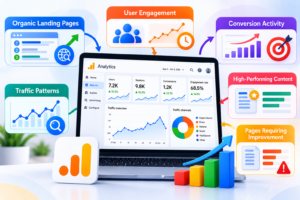
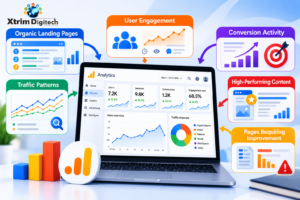
- Organic landing pages
- User engagement
- Conversion activity
- Traffic patterns
- High-performing content
- Pages requiring improvement
Analytics should be used alongside search performance data because different platforms measure different aspects of search visibility.
Combining SEO data with Google Analytics Metrics can provide a broader understanding of organic website performance.
How Digital Marketing Services in Indore Use Google Analytics
Businesses using Digital Marketing Services in Indore may work across multiple channels, including SEO, paid advertising, social media, content marketing, and local marketing.
Google Analytics can help connect these activities with website behaviour.
Business owners can examine which channels bring visitors, how users interact with landing pages, and whether campaigns contribute to conversions.
This allows marketing decisions to be based on measurable information rather than traffic volume alone.
How Website Performance Analysis Helps Identify Problems
Website Performance Analysis involves reviewing different aspects of website behaviour to identify strengths and potential problems.
For example:
A page may receive high traffic but low engagement.
A landing page may receive visitors but few conversions.
A mobile page may receive significant traffic but lower interaction.
A marketing campaign may generate clicks without meaningful enquiries.
These patterns can help businesses determine where further investigation is required.
The next step may involve improving content, website design, technical performance, targeting, calls to action, or conversion tracking.
How Google Analytics Services in Indore Can Support Reporting
Businesses that need structured analytics reporting may work with professionals providing Google Analytics Services in Indore.
Analytics reporting can help convert raw website data into useful business insights.
A practical report may focus on:
- Traffic performance
- Acquisition channels
- Engagement
- Landing pages
- Events
- Conversions
- Device data
- Geographic performance
The objective should be to explain what changed, why it matters, and what areas may require further attention.
Key Takeaways: Google Analytics Metrics for Business
Understanding Google Analytics Metrics can help business owners evaluate their websites more effectively.
The most useful areas to monitor include:
- Users
- Sessions
- Engagement rate
- Average engagement time
- Views
- Traffic acquisition
- Source and medium
- Landing pages
- Events
- Conversions
- Conversion rate
- Device performance
- Geographic data
No single metric can explain the complete performance of a website.
Business owners should connect analytics data with their actual business goals. A lead-generation website may focus on enquiries and forms, while an ecommerce website may focus on purchases and revenue.
The most useful analytics strategy is one that turns website data into actionable business insights.
Frequently Asked Questions
Important metrics include users, sessions, engagement rate, traffic acquisition, landing pages, events, conversions, conversion rate, device performance, and geographic data.
Conclusion Google Analytics Metrics
Google Analytics provides business owners with valuable information about what happens after users reach their websites. Understanding Google Analytics Metrics can help businesses move beyond basic traffic numbers and evaluate engagement, acquisition, content performance, conversions, and user behaviour.
Metrics such as users, sessions, engagement rate, traffic acquisition, landing pages, events, and conversion rate each provide a different perspective on website performance.
For businesses targeting local customers, Website Analytics in Indore can also help understand whether marketing activities are reaching the intended audience. Similarly, SEO Services in Indore and Digital Marketing Services in Indore can use analytics data to evaluate campaign performance and identify opportunities for optimization.
The goal of analytics should not be to track every available number. Instead, businesses should focus on the Google Analytics Metrics that are directly connected to their objectives.
When website data is combined with proper strategy, SEO, marketing, website optimization, and conversion tracking, business owners can make more informed decisions and create a digital presence that supports measurable business growth.